Asset Retirement Obligation Software for Canadian Operators
Every producing well in Canada carries a bill that comes due at the end of its life. Plugging and abandonment, surface remediation, reclamation to the regulator’s standard, the full cost of walking away cleanly. That number is your asset retirement obligation, and you are required to estimate it, carry it, and report it long before the rig ever leaves the lease. For an operator with a handful of wells, a spreadsheet holds it together. For an operator with a few hundred aging sites, the spreadsheet is where the number quietly drifts away from reality.
Asset retirement obligation software exists to keep that number honest. Not by running a better discount-rate calculation, your accountants already do that, but by connecting the estimate to the field conditions that actually move it. The math behind an ARO is standardized. The inputs feeding that math are scattered across field tickets, site photos, and half a dozen spreadsheets, and that is where the trouble starts.
This guide covers what ARO software does, how it differs from the accounting subledgers most people picture when they hear the term, what the April 2026 changes to AER Directive 088 mean for your liability position, and what Canadian operators should evaluate before they buy.
At a Glance
- Asset retirement obligation software tracks the estimated cost to abandon, remediate, and reclaim well sites, and keeps that estimate defensible as field conditions change.
- Most tools branded for ARO are accounting subledgers built for large operators. They calculate the provision but assume the cost data feeding them is already accurate.
- For Canadian operators, ARO accuracy is now a regulatory exposure. AER's April 2026 Directive 088 ties closure quotas and licence transfers to your liability position.
- The weak link is rarely the math. It is the field data. Software that connects site conditions to the estimate produces a number you can defend in an audit or a licence transfer.
- Aspenleaf manages more than 200 end-of-life sites in Fieldshare and cut report-generation time by 80 percent and manual data-entry points by 60 percent.
What Is Asset Retirement Obligation (ARO) Software?
Asset retirement obligation software is a system for estimating, tracking, and reporting the cost of retiring oil and gas assets: the plugging, abandonment, remediation, and reclamation work owed at the end of a site’s life. Unlike a general accounting tool, it ties each obligation to the specific well, lease, and field conditions that determine what closure will actually cost.
An asset retirement obligation itself is a legal and regulatory liability. When you put a well into production, you take on the future cost of cleaning it up, and accounting standards require you to recognize that cost now, at the present value of the estimated future spend. The obligation then grows each year through accretion as settlement gets closer.
That accounting entry is one thing. Managing the operational reality behind it is another. ARO tracking software sits on the operational side: it holds the site data, cost estimates, closure status, and supporting evidence for every obligation in your portfolio, so the number in the financial statement traces back to something real.
How Is an Asset Retirement Obligation Calculated, and Where Do the Numbers Break?
An ARO is recorded at the present value of the estimated future cost to retire the asset, then increased each year through accretion as the obligation approaches settlement. The method is standardized. The inputs are not. The estimate is only as good as the field data behind the cost assumptions, and that is where most numbers break.
The mechanics are settled: estimate the cash flow to abandon and reclaim the site, discount it to a fair value today, and recognize the provision under IAS 37, as the Baker Tilly guide to ARO for oil and gas lays out. The hard part is the cost itself, because no two wells retire for the same number. A peer-reviewed analysis of roughly 19,500 decommissioned wells in the United States, published in Environmental Science & Technology, found a median cost near US$20,000 to plug a simple well, about US$76,000 once surface reclamation is added, and roughly 20 percent more for every additional 1,000 feet of depth, with rare cases passing US$1 million per well (Resources for the Future). Those are American figures, but the drivers transfer directly to Canadian sites: depth, age, access, and site condition swing the bill by multiples.
A single standardized estimate cannot hold that spread. A deep, aging, or contaminated well carried at the average comes in at a multiple of the budgeted figure, and you usually find out at execution, when the money is already committed. When the cost inputs also live in a finance spreadsheet that refreshes quarterly while field conditions change weekly, the estimate is stale on top of being averaged: a site that developed new contamination six months ago is still carried at its pre-contamination number. That gap between the spreadsheet and the field is exactly why deemed and actual liability rarely match, and it is the gap an auditor or a regulator will eventually find for you.
Do Canadian Operators Need ARO Software, or Is a Spreadsheet Enough?
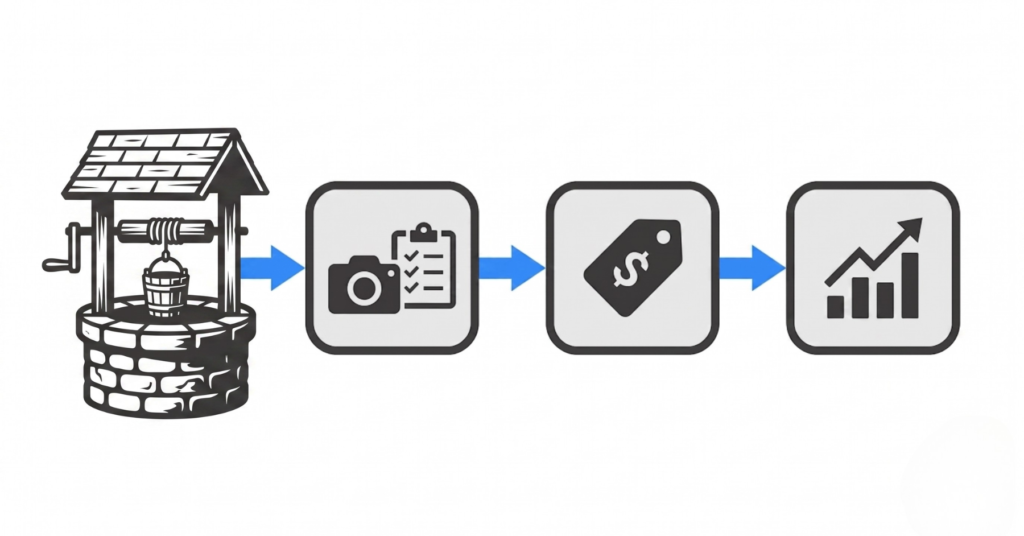
A spreadsheet is enough until volume and regulatory scrutiny outgrow it. Once you are managing dozens of end-of-life sites, reconciling cost estimates across file versions by hand, and defending those numbers to an auditor or the regulator, the spreadsheet becomes the liability it was meant to track. Purpose-built asset retirement obligation software removes that manual reconciliation.
This is not a hypothetical tipping point. Aspenleaf Energy, a Calgary operator, reached it with more than 200 end-of-life sites whose data was scattered across spreadsheets, hard copies, and shared drives. Comprehensive liability calculations were effectively impossible, because no one could see every site’s status, cost, and risk in one place. The team was spending its time managing data instead of executing the retirement program.
If reformatting numbers for a filing takes days, if two people keep different versions of the same site’s cost, or if you cannot answer “what is our current liability across the portfolio” without a week of work, you have outgrown spreadsheets for oil field data. Here is how the two approaches compare on the work that actually consumes your team’s time.
| Capability | Spreadsheet | Purpose-built ARO software |
|---|---|---|
| Cost estimate per site | One cell, no source, no evidence | Tied to the site record with supporting field data and photos |
| Updating for field changes | Re-keyed by hand, usually late | Updated at the site, flows straight to the estimate |
| Portfolio rollup | Copy-paste across tabs and files | Live dashboard across every site |
| Audit trail | None, or file-version history | Every entry and edit logged with user and timestamp |
| AER and BCER reporting | Rebuilt each cycle from scratch | Assembled from the live record |
| Licence-transfer due diligence | Days of reconciliation | Current liability position on demand |
How Does ARO Software Fit AER Directive 088 and the New Inventory Reduction Program?
AER’s Directive 088, re-issued in April 2026 as Licensee Life-Cycle Management, ties your closure spending and your ability to transfer licences to your liability position. Asset retirement obligation software gives you the defensible, current numbers the Licensee Capability Assessment and the new Inventory Reduction Program now demand, instead of a reconciliation scramble before every filing.
The April 2026 edition of Directive 088 reframed liability management as a full life-cycle discipline and introduced the Inventory Reduction Program, which carries closure quotas, closure nominations, and a new directed-closure section giving the AER authority over the timing and priority of closure work. The terminology changed with it: what used to be called mandatory closure spend is now your licensee quota, and the industry-wide figure is now the industry closure quota (AER Bulletin 2026-18). The AER set the industry-wide requirement for 2026 at $750 million, with each licensee’s share based on its inactive liability as of September 2, 2025 (AER Bulletin 2025-27). For 2027 the industry figure holds at $750 million; here is how closure spend is tracked against quota through the year.
The Licensee Capability Assessment then evaluates your overall financial health to decide whether you can hold and transfer licences at all. Your ARO position is now a gating factor on deals, not just a line in the financial statements. British Columbia has already legislated in the same direction: the Energy Statutes Amendment Act, 2022 expands orphan-site liability beyond the permit holder to “responsible persons,” a category broad enough to reach those holding a legal or beneficial interest in the rights, production, or profits. An operator whose closure numbers flow directly from field data tells a very different story in one of these reviews than an operator reconciling spreadsheets the night before. The reporting side of an AER liability tracker becomes a byproduct of connected data rather than a separate project.
ARO Accounting Tools vs Field-Data Platforms: What Is the Difference?
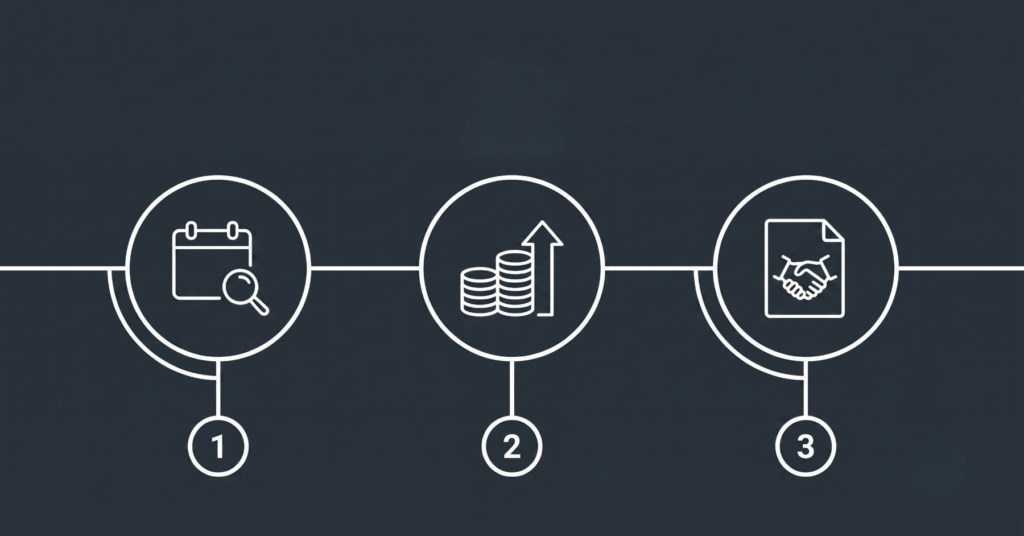
Most software branded for asset retirement obligations is accounting software. Tools like Quorum’s ARO Manager, the former Aucerna suite now under Quorum, and US-built subledgers such as ENFOS automate accretion, depreciation, and ASC 410-20 disclosure. They are built to report the number. A field-data platform is built to make the number trustworthy in the first place.
Be clear about where the enterprise suites win. For a large, multi-basin operator with a dedicated finance team, full reserves and economics reporting, and obligations spread across tens of thousands of wells, a platform like Quorum’s is built for exactly that scale, and nothing here suggests otherwise. They handle the provision math, the journal entries, and the financial-reporting disclosures that public companies file every year, and they do it well.
The question is whether a mid-size Canadian operator needs that weight. Enterprise ARO suites assume the cost estimate handed to them is already accurate, and they are priced, scoped, and largely shaped around US accounting standards with provincial Canadian rules configured on top. A field-data platform works the other side of the problem. It captures site conditions, photos, and closure progress in the field, attaches them to a mapped record for each well and lease, and ties cost tracking and AFE budgets to that same record. The output is a defensible liability record and a current cost estimate that then feeds your accounting system or your ARO forecasting model. Fieldshare sits here. It does not replace your GAAP subledger; it gives that subledger a number worth reporting.
| Dimension | Enterprise ARO / accounting suite | Field-data ARO platform (Fieldshare) |
|---|---|---|
| Strongest at | Provision math, accretion, GAAP and ASC 410 disclosure, reserves integration | Capturing the field data and cost evidence behind the estimate |
| Best fit | Large multi-basin operators with dedicated finance teams | Mid-size Canadian operators who need field-to-estimate without enterprise overhead |
| Canadian regulatory | Capable, often US-GAAP-led with provincial rules configured on top | AER and BCER closure and reclamation native |
| Field capture (photos, maps, offline) | Varies by module, not the core of the ARO tool | Core of the platform |
| Cost and scope | Enterprise licence plus an implementation project | Scoped to your sites and workflows, lower entry point |
| In one line | Built to report the number | Built to make the number trustworthy, then feed it onward |
What Should Canadian Operators Look For in ARO Software?
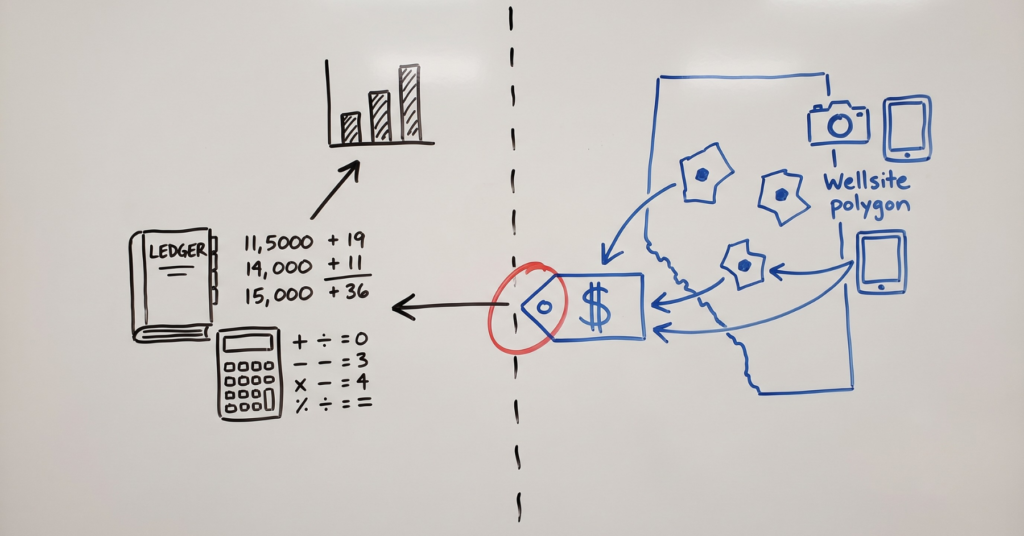
The right asset retirement obligation software for a Canadian operator does more than store a liability figure. It connects field conditions to the estimate, fits AER and BCER closure requirements, and produces an audit trail you can hand to a regulator without a week of preparation. Use this checklist when you evaluate options.
- Canadian regulatory fit. AER Directive 088 and BCER closure and reclamation requirements should be native to the system, not a US template with provincial fields added on.
- Field-to-forecast data flow. Site conditions captured in the field should update the cost estimate directly, with no re-keying between systems.
- AFE and budget integration. Authorization for Expenditure and closure budgets belong on the same site record as the liability, so spending and obligation stay in step.
- Map and polygon site data. Each well and lease should be a spatial record with photos attached, so the estimate has visible evidence behind it.
- Offline field capture. Remote sites have no signal. The data should be captured once, at the source, through offline field capture that syncs when connectivity returns.
- A complete audit trail. Every entry, edit, and status change should be logged with user and timestamp, ready for licence transfers and audits.
- Cost-versus-actual tracking. The system should close the gap between the standardized estimate and what reclamation actually costs, which is the heart of choosing a reclamation tracking system.
What Does Moving Off Spreadsheets Actually Involve?
The honest answer to the biggest objection: switching does not mean a risky big-bang migration. The operators who do this well start narrow, prove the system on their highest-stakes sites, and keep the spreadsheet running in parallel until the new records are trusted. You are not betting a reporting cycle on a single cutover.
A workable sequence looks like this. Start with the sites that carry the most liability or sit closest to closure, because that is where an accurate number matters most and where the payback shows up first. Bring their data in, run them alongside the existing spreadsheet for a cycle, and confirm the numbers reconcile. Then expand by area or by team rather than all at once. Aspenleaf brought more than 200 end-of-life sites into one system this way, gradually enough that the team kept executing its retirement program throughout instead of pausing to migrate.
The transition cost is real but bounded, and it is almost always smaller than the recurring cost of the manual reconciliation it replaces. The goal is not to digitize everything overnight. It is to stop the estimate from drifting away from the field, one group of sites at a time.
What Changes When ARO Data Is Connected?
When the field data and the cost estimate live in the same system, ARO reporting stops being a quarterly reconstruction project. Aspenleaf moved its asset retirement program onto Fieldshare in 2018, using customizable mapping, photo overlays, site-specific polygon data, oil and gas licensing data, automated AFE management, and integrated budgeting to bring more than 200 end-of-life sites into one place.
The results were operational, not theoretical. Aspenleaf cut the time spent generating reports by 80 percent and eliminated 60 percent of its manual data-entry points. With site location, project status, contractor details, risk assessments, and pipeline impacts living in one record instead of scattered across spreadsheets, the team shifted its hours from managing data back to executing the retirement program and planning it across the short, medium, and long term.
That is the real return on forecasting ARO, production, and budgets together from connected data. The regulator is tightening the link between liability and licence eligibility. The operators who will navigate that comfortably are the ones whose numbers already trace to the field, not the ones rebuilding them before every filing.
Want your asset retirement obligations tracked from the field to the forecast, not rebuilt every quarter? See how oil and gas asset management works in Fieldshare, or book a demo and we will walk your team through how operators like Aspenleaf brought hundreds of end-of-life sites into a single, defensible system.
Frequently Asked Questions
It is a system for estimating, tracking, and reporting the cost of retiring oil and gas assets, including plugging, abandonment, remediation, and reclamation. It ties each obligation to the specific site and field conditions that drive closure cost, so the liability number in your financial statements is supported by real data.
Canadian public companies recognize AROs under IFRS, mainly IAS 37 for the provision and IAS 16 for the related asset. Private companies use ASPE Section 3110. US-based operations use ASC 410-20. ARO software supports these standards by feeding them an accurate cost estimate; it does not replace the accounting treatment itself.
Yes. Canadian operators answer to the AER and BCER, with provincial closure quotas, dormancy timelines, and reclamation standards that differ from the financial-reporting focus of ASC 410-20 in the US. Software built around Canadian regulatory requirements handles these natively instead of bolting provincial rules onto a US template.
The April 2026 Directive 088 ties your licensee quota and licence eligibility to your liability position through the Licensee Capability Assessment and the Inventory Reduction Program. ARO software keeps a current, defensible liability number and a complete audit trail, so you can answer a Directive 088 review without reconstructing the data first.
No, and it should not try to. A field-data ARO platform produces the cost estimate and the supporting evidence, then feeds that into your accounting system or ARO subledger. The two work together: the platform makes the number trustworthy, the accounting system reports it.
Pricing usually tracks three drivers: how many sites or wells you manage, how many people need access, and which modules you turn on, such as field capture, cost and AFE tracking, and reporting. Enterprise accounting suites carry a large annual licence plus an implementation project, which is why they fit operators with dedicated finance teams. Purpose-built field-data platforms are typically scoped per site and seat with a lower entry point. Whatever the sticker, weigh it against the number it protects: a single liability understated by a multiple at a licence-transfer review costs more than years of software. Ask vendors for a quote scoped to your site count and workflows rather than a list price.