Oil and Gas Data Management Software: What to Look For in 2026
The software pitch is always the same. Unified platform. Single source of truth. End-to-end visibility. Enterprise vendors have been making these promises to the oil and gas industry for years, and mid-size Canadian operators have been paying for implementations that take eighteen months, need a dedicated IT resource, and still do not fix the problems their field crews face every day. Running oil and gas project management without enterprise software is possible, and at mid-size scale it is usually the better fit.
The market has matured since then. There are real differences between platforms now, and those differences have measurable consequences for compliance outcomes, field productivity, and regulatory exposure. This guide covers what features actually matter in 2026, how to evaluate platform approaches, and what mid-size Canadian operators should look for before they commit to a contract.
What Oil and Gas Data Management Software Actually Needs to Do
Before comparing platforms, it helps to be precise about the problem. Oil and gas data management is not a single workflow. It spans field inspections, safety audits, environmental sampling, equipment records, ARO tracking, and regulatory reporting. All of which need to connect.
The failure mode most operators know well is fragmentation. Inspections in one spreadsheet. Compliance records in another. Environmental data in an email chain somewhere. When the AER or BCER asks for documentation, the honest answer is: give us a week. That same fragmentation is why AI fails in oil and gas: a model layered on scattered records inherits every gap and error underneath.
Purpose-built software solves fragmentation by connecting data at the point of capture. When a field inspector records an observation, that observation flows directly into the compliance record, triggers any required follow-up, and becomes available for reporting without anyone manually moving it between systems. The data enters once, at the source, and everything downstream updates itself.
The Five Features That Separate Serious Platforms from Everything Else
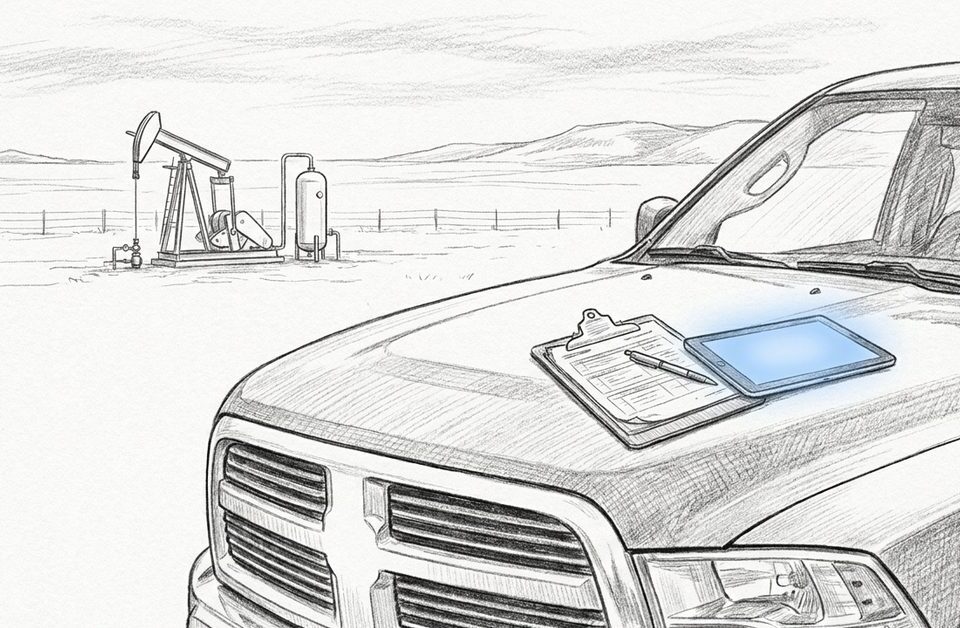
Offline-first field data capture is the first one, and it is non-negotiable for Canadian operations. Well sites, pipeline corridors, and remote facilities routinely operate outside cellular coverage. Any software that needs an internet connection to function will fail exactly when your field crews need it most. Offline-first means the application stores data locally on the device, allows full functionality without a connection, and syncs automatically when connectivity is restored. That is architecturally different from software that simply has a mobile app. When evaluating platforms, ask specifically: can a field crew complete a full inspection, log a deficiency, and attach photos with zero connectivity? If the answer involves “mostly” or “after a sync,” keep looking.
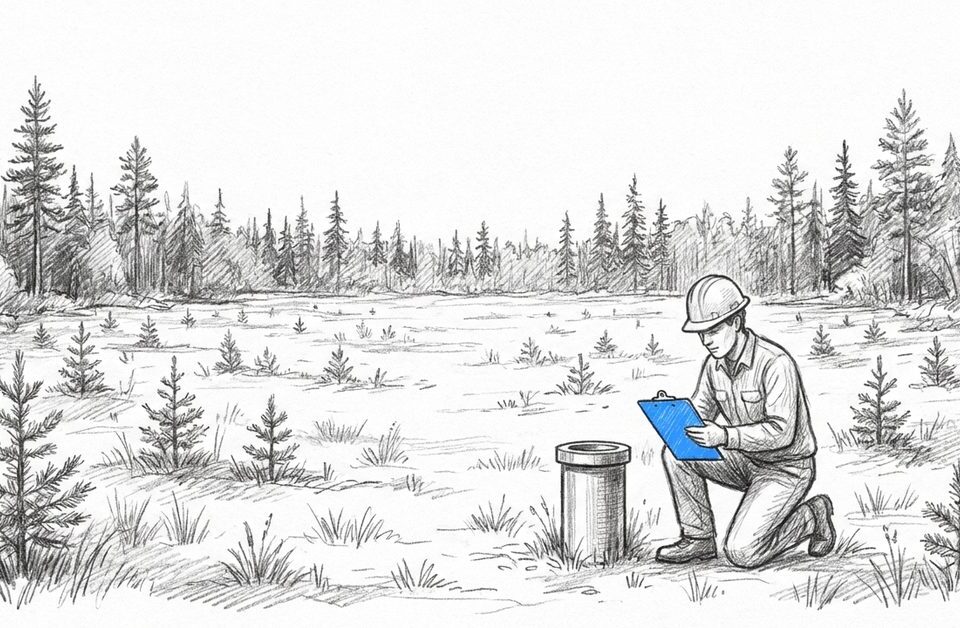
GIS integration and spatial awareness is the second. Location context makes field data significantly more useful. When an inspection record is tied to a precise GPS coordinate and visible on a map alongside other infrastructure, patterns emerge that flat lists cannot reveal. A cluster of deficiencies in a particular area of a facility. Equipment that consistently generates inspection flags. Environmental monitoring points that are overdue for sampling. GIS integration should do more than display a dot on a map. It should let users filter inspection history by location, navigate to assets in the field using GPS, and generate spatial reports that regulators increasingly expect.
Compliance trails that generate themselves is the third, and the feature that most separates purpose-built software from adapted general tools. Every record change, every inspection submission, every deficiency status update should be timestamped, attributed to a user, and preserved permanently. This is not about adding steps for field crews. It is about the system recording what happens as it happens. When a compliance trail generates itself, operators answer regulatory questions with confidence rather than with a week of assembly. Pulling a complete record for a specific well should take seconds, not days.
Mobile field input that crews will actually use is the fourth. Software adoption fails when the tool adds friction to field work. If inspectors spend more time navigating an interface than doing the inspection, they will find workarounds. Those workarounds usually involve paper or text messages. Good mobile input means configurable checklists that match the actual workflow, the ability to add photos and voice notes without switching apps, and forms that can be completed with gloves on, in direct sunlight, on a screen that has survived being dropped twice.
Reporting that does not require a specialist is the fifth. If generating a compliance report means exporting data, loading it into another tool, and reformatting it for submission, the reporting is broken. Integrated reporting means the system where data is captured is also where reports are produced. Managers should be able to filter by site, time period, and inspection type and produce a submission-ready document without going through the analytics team.
Enterprise Platforms vs Purpose-Built Software: An Honest Comparison
The enterprise platform argument is well-rehearsed. One vendor. Integrated financials, operations, and compliance. Theoretically, everything connects.
The reality for mid-size operators is different. Enterprise platforms are built for a scale most Canadian independent operators do not operate at. Implementation timelines routinely run six to eighteen months. Licensing structures price for enterprise budgets. Configuration needs specialized consultants. And field-facing functionality is typically weaker than the desktop and reporting components, because the vendors built those platforms for office users first and field users as an afterthought.
Purpose-built software starts from the other direction. It is designed around the specific workflows of oil and gas field operations: inspections, safety observations, deficiency tracking, compliance documentation. The feature set is narrower by design, and that narrowness is an advantage. There is less to configure, less to train, and less to break.
For most mid-size Canadian operators running between 50 and 500 wells, with field crews that rotate and regulatory requirements that are real and immediate, purpose-built software delivers faster time to value, higher adoption rates, and compliance outcomes that enterprise platforms promise but rarely achieve at this scale. The honest comparison is not better or worse. It is “built for the same customer you are.” Enterprise platforms were not.
What Mid-Size Canadian Operators Specifically Need in 2026
The oil and gas industry challenges facing Canadian operators in 2026 are not abstract. The AER’s liability management framework, evolving ARO requirements, and the BCER’s documentation enforcement posture all point in the same direction. Operators who cannot produce complete, accurate records on short notice are exposed.
Mid-size operators face a specific version of this challenge. They have the complexity of a large operation, with dozens of sites and rotating crews and multiple reporting streams, but they do not have the internal resources large operators use to manage documentation at scale. They need software that reduces administrative burden rather than adding to it.
Whitecap Resources Inc. is a clear example of what that looks like in practice. After moving off fragmented tracking systems, Whitecap cut their data management time by 70%. Their HSE Manager, Jim Gordon, described the shift as finally having the tools he needed to drive KPIs rather than chase down documentation. The speed of capture and the speed of retrieval were what made the difference, and both came from the data living in one place.
Five Questions to Ask Any Vendor Before You Buy
The sales demonstration will always look clean. The real test is what happens when a field crew tries to use the software at a remote site with no connectivity, under time pressure, wearing gloves. Ask vendors these questions directly.
- Can your software complete a full field inspection with zero internet connectivity, including photo attachments?
- How long does implementation take, and what does it require from our team?
- How are compliance trails generated, and what does the audit log actually look like?
- What does your GIS capability do beyond displaying a map?
- What integrations do you have with the ERP or financial systems we already use?
A vendor who answers clearly and specifically is a different conversation than one who pivots to roadmap or “we can customize that.”
The Bottom Line for Canadian Operators
Oil and gas data management software in 2026 is not a speculative investment. It is operational infrastructure. The only question is whether your infrastructure is built for your actual conditions, which means Canadian field environments, AER and BCER compliance requirements, and mid-size operational complexity, or whether it is built for a different customer at a different scale.
Enterprise platforms serve a specific market well. That market is large operators with implementation budgets, IT departments, and long procurement timelines. For everyone else, the practical choice is purpose-built software that solves field documentation, compliance trails, and audit-ready reporting without requiring a transformation project to get there.
Ready to see what purpose-built oil and gas data management software actually looks like? Explore the Fieldshare platform or book a demo and we will walk your team through the features Whitecap, Aspenleaf, and Long Run use to keep their documentation audit-ready without a dedicated IT resource. If you are scoping this for a producing asset base, start with our oil and gas asset management software.