The Hidden Challenges of Tracking Restoration Work: How Software Fixes Them
Environmental restoration projects look straightforward on paper. Assess the damage, develop a remediation plan, execute the work, monitor results, close out the project. In practice, tracking restoration work involves managing a web of interconnected data that grows more complex with each project phase.
The challenge is not collecting data. Environmental teams generate plenty of it. The challenge is maintaining data integrity across years of fieldwork, connecting observations to regulatory requirements, and producing documentation that satisfies auditors without consuming your entire team’s bandwidth.
This guide examines why restoration tracking creates hidden management challenges and how purpose-built software addresses each one systematically.
Why Restoration Projects Create Tracking Nightmares
Restoration work differs from standard environmental consulting in ways that amplify data management complexity. Understanding these differences explains why general-purpose tools consistently fall short.
Extended Project Timelines
Most consulting engagements wrap up in months. Restoration projects stretch across years, sometimes decades. A contaminated site might require five years of groundwater monitoring before closure. A reclamation project might track revegetation success over a ten-year horizon.
Extended timelines create continuity challenges. Staff turnover means different people access records at different project phases. Original documentation methods may become obsolete. The person who designed the tracking system may have left the organization years before the project closes.
Multiple Stakeholder Requirements
Restoration projects typically involve more parties than standard assessments. Regulators require specific documentation formats. Property owners need progress updates. Insurers want cost tracking. Legal teams demand defensible records for liability protection.
Each stakeholder brings different information needs. Satisfying all of them from a single data source requires flexibility that spreadsheets simply cannot provide.
Progressive Disclosure of Conditions
Unlike assessments that characterize known conditions, restoration work frequently uncovers new information during execution. Excavation reveals unexpected contamination. Monitoring wells show plume migration patterns that differ from models. Vegetation surveys identify species assemblages requiring modified approaches.
Tracking systems must accommodate this progressive disclosure, connecting new findings to existing records and updating project scope without losing historical context.
The Five Hidden Challenges
Beyond general complexity, restoration projects create specific tracking challenges that undermine project success when unaddressed.
Challenge 1: Maintaining Data Accuracy Across Time
When a project spans five years, data integrity requires active maintenance. Field measurements need consistent methodology. Lab analyses need comparable detection limits. Location references need stable coordinate systems.
Without systematic tracking, small inconsistencies accumulate. A sampling location recorded with handheld GPS in year one may not match coordinates from survey-grade equipment in year three. Detection limits that changed when the lab updated methods create apparent concentration changes that reflect analytical differences rather than site conditions.
These inconsistencies complicate trend analysis and can trigger unnecessary investigation of apparent anomalies that exist only in the data.
Challenge 2: Connecting Field Observations to Compliance Requirements
Restoration projects operate under regulatory frameworks that specify required documentation. The EPA Brownfields Program and provincial equivalents define what must be tracked and how it must be reported. For oil and gas sites in British Columbia, many of those requirements sit in the BC Energy Regulator’s Site Remediation and Restoration Manual, revised in June 2026. Here is what version 1.8 changed for restoration work.
Field staff collecting data may not know which observations connect to which requirements. A vegetation survey might satisfy multiple compliance obligations, but only if observations are recorded in formats that map to regulatory reporting templates.
When field data and compliance requirements live in separate systems, connecting them requires manual translation that consumes time and introduces errors.
Challenge 3: Coordinating Distributed Teams
Restoration projects spread work across locations and organizations. Site contractors perform physical remediation. Environmental consultants conduct monitoring. Laboratories analyze samples. Regulatory agencies review submissions.
Each party generates data that others need. Contractors document excavation volumes. Consultants record sampling results. Labs report analytical findings. When these data streams remain siloed, assembling a complete project picture requires chasing information across multiple organizations.
Anna Charbonneau, Senior Environmental Engineer at Whitecap Resources Inc., describes the coordination challenge: “One of the things I most appreciate about Fieldshare is the technical support. We have the opportunity to know the developers assigned to our program personally, and we work together on solutions for program management.”
This collaborative approach becomes essential when managing complex restoration portfolios.
Challenge 4: Producing Audit-Ready Documentation
Restoration projects face audit scrutiny from multiple directions. Regulators verify compliance. Insurers validate cost claims. Legal teams defend against liability assertions. Property transactions require due diligence review.
Each audit context requires different documentation cuts from the same underlying data. Regulatory audits focus on compliance milestones. Insurance audits examine cost allocation. Legal reviews need complete chain of custody records.
Producing these different views from fragmented data systems means recreating documentation for each audit, hoping that independently assembled records remain consistent.
Challenge 5: Scaling Work Without Proportional Staff Growth
Successful restoration practices grow their project portfolios. More projects mean more data, more stakeholders, and more compliance obligations. Without systematic tracking, administrative burden grows faster than project count.
Teams describe reaching capacity limits not from technical work but from data management overhead. Senior staff spend increasing time on reporting and coordination rather than technical direction.
How Software Addresses Each Challenge
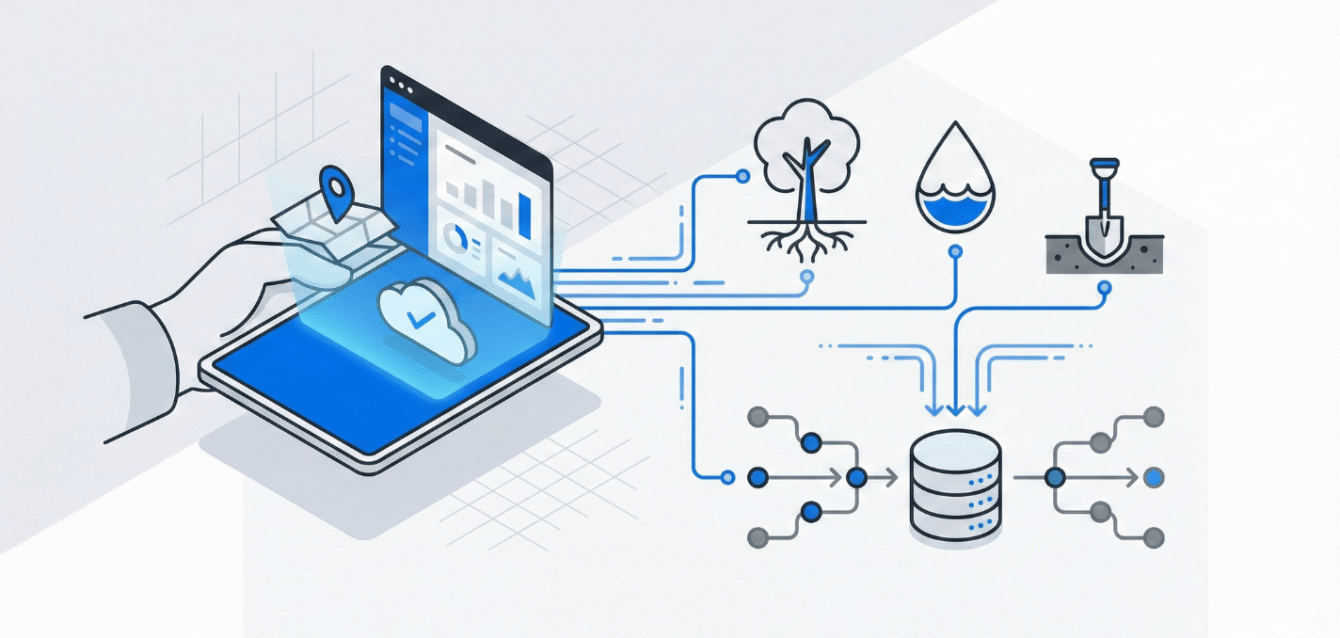
Purpose-built restoration tracking software does not eliminate these challenges, but it provides systematic solutions that prevent them from consuming disproportionate resources.
Solution 1: Enforced Data Standards
Software can require consistent data formats at the point of collection. Digital forms ensure field staff capture required parameters in standardized formats. Validation rules flag entries outside expected ranges before they enter the database.
This enforcement happens automatically, without relying on individual judgment or memory. Five years into a project, data collected today remains compatible with data collected at project inception.
Solution 2: Compliance Mapping
Effective software connects data elements to regulatory requirements. When a field observation satisfies a compliance obligation, that connection is documented automatically.
Reporting becomes a matter of querying the database for compliance-relevant records rather than searching through files to locate supporting documentation. Gaps become visible before regulators identify them.
Solution 3: Centralized Collaboration
When all project parties access the same system, coordination happens automatically. Contractor updates appear in consultant views. Lab reports are filed with sample records. Regulatory submissions pull from current data.
Noreen Sumara at Long Run Exploration describes the benefit: “I love having one place that everybody goes to for information. It prevents duplication and keeps everything consistent.”
This consistency proves especially valuable during project transitions when new team members need complete context quickly.
Solution 4: Audit-Ready Architecture
Software designed for restoration work anticipates audit requirements. Change logs document who modified what and when. Version history preserves previous record states. Export functions generate documentation in formats auditors expect.
When audits occur, response involves running reports rather than reconstructing documentation. Organizations report reducing audit response time from weeks to days after implementing proper tracking systems.
Solution 5: Scalable Administration
Centralized systems handle portfolio growth without proportional administrative growth. Adding a new project means configuring another database entry, not creating another parallel tracking system.
Medicine Hat achieved a 300% productivity increase in their environmental monitoring programs after implementing centralized tracking. This productivity gain came primarily from reduced administrative overhead rather than faster field work.
Evaluating Software Options
Not all restoration tracking software delivers equal value. When evaluating options, prioritize capabilities that address the specific challenges restoration work creates.
Long-Term Data Integrity
Ask how the system maintains data compatibility across version updates. Projects spanning years will outlast multiple software versions. Migration between versions should preserve complete data integrity without requiring manual intervention.
Offline Field Capability
Restoration sites frequently lack network connectivity. Software must support full functionality offline, with reliable synchronization when connection restores. Systems requiring constant connectivity fail in exactly the situations where tracking matters most.
Flexible Reporting
Different stakeholders need different views of the same data. Evaluate whether the system can produce regulatory reports, management summaries, and audit documentation from single data sources without manual reformatting.
Integration Architecture
Restoration projects connect to other systems. Laboratory information management systems provide analytical results. GIS platforms provide spatial context. Cost tracking systems manage budgets. Evaluate how smoothly data flows between systems.
The Business Case for Better Tracking
Investing in proper tracking software requires justification. The business case rests on three pillars.
Time Recovery
Teams using fragmented systems spend substantial time on data management rather than technical work. Whitecap Resources Inc. documented 70% reduction in data management time after implementing centralized tracking. That time returns to billable project work or capacity for additional projects.
Risk Reduction
Compliance gaps and audit failures create real costs. Regulatory penalties, project delays, and liability exposure all stem from documentation inadequacy. Systematic tracking reduces these risks by ensuring complete, consistent records.
Competitive Advantage
Clients increasingly evaluate consultants on project management capability alongside technical expertise. Demonstrating systematic tracking approaches differentiates practices in competitive proposal situations. Our environmental data management software guide breaks down what consultants should look for.
Taking the Next Step
Restoration tracking challenges will not resolve themselves. Projects continue generating data that needs management. Regulatory requirements continue expanding. Team coordination continues demanding attention.
The question is whether your current approach scales to meet growing demands or whether data management overhead will eventually constrain practice growth.
Purpose-built software provides a path forward. Teams that make the transition report spending less time on administration and more time on the environmental work that attracted them to the field in the first place.
Ready to see how restoration tracking software handles your specific project types? Schedule a demo to explore whether centralized tracking fits your practice needs. For the wider picture, see our environmental consulting software.