introductionOil Well Asset Management: What End-to-End Actually Means for Canadian Operators
A well is not a short-term asset. From the first land assessment to the final reclamation certificate, a single well can span 30 years or more of active management. Production data, maintenance records, integrity test results, regulatory filings, and abandonment cost estimates accumulate across that entire timeline. For most Canadian operators, that information is scattered across spreadsheets, shared drives, email threads, and the memories of people who may no longer work there.
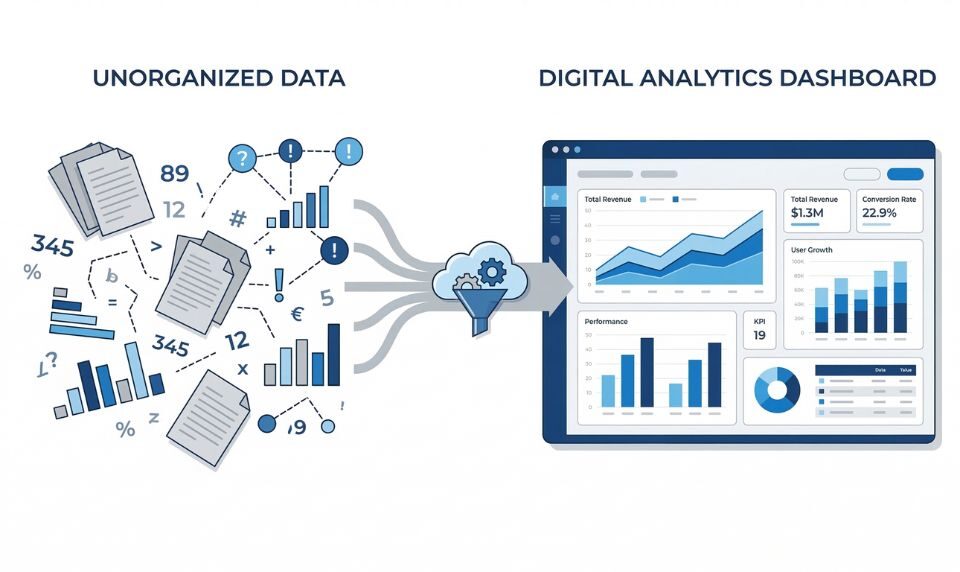
Oil well asset management software brings every lifecycle stage into one system. When it works, you can pull up any well and see its complete history: drilling records, production trends, maintenance log, compliance status, and ARO estimate. When it does not work, you spend days reconstructing basic asset information every time a decision needs to be made.
This guide covers what end-to-end management actually includes, why the Canadian regulatory landscape makes it more urgent than ever, and what separates platforms built for Canadian operators from those adapted after the fact.
The Five Stages of Oil Well Asset Management
“End-to-end” is a phrase that gets used loosely. For Canadian operators, it means managing data and workflows across five distinct lifecycle stages, each with its own regulatory requirements and operational challenges.
Stage 1: Planning and acquisition. Before drilling begins, operators evaluate land opportunities, secure mineral rights, complete environmental assessments, and submit regulatory applications. The data generated at this stage, including geological assessments, permit statuses, and capital allocation decisions, directly informs every phase that follows. When planning data ends up siloed in email threads and spreadsheets, it never connects to the operational systems that need it.
Stage 2: Drilling and completion. This is the most capital-intensive phase. Drilling progress, equipment deployment, contractor schedules, costs, and completion specifications all need to be captured in formats that remain accessible for decades. Well construction details and casing records are not just operational data. They are regulatory records that maintenance teams and auditors will reference for the life of the well.
Stage 3: Production and optimization. Once a well is producing, daily volumes, decline curve analysis, artificial lift performance, and revenue tracking become the focus. For Canadian operators, production reporting also has a regulatory dimension. Provincial regulators require monthly volume submissions through Petrinex, and discrepancies between reported and actual volumes trigger audits. A centralized system that captures production data at the source eliminates the double entry and reconciliation errors that come with spreadsheet-based tracking.
Stage 4: Maintenance and compliance. This is where most operators struggle, particularly those managing hundreds or thousands of wells. Preventive maintenance scheduling, work order tracking, inspection records, and incident documentation all need to be organized and accessible on demand. In Canada, the AER enforces directives covering well integrity testing, emergency response planning, and environmental monitoring. The BC Energy Regulator and Saskatchewan’s Ministry of Energy and Resources each add their own requirements. An end-to-end system accounts for these provincial differences without forcing operators to build separate workflows for each jurisdiction.
Stage 5: Abandonment and reclamation. This stage carries some of the largest financial and regulatory implications, and most operators are least prepared for it. ARO forecasting, abandonment scheduling, remediation tracking, and reclamation certificate management all fall here. End-to-end management means your abandonment planning is informed by the same data that tracked the well through its producing life. Construction records, environmental baselines, and maintenance history feed into better cost estimates and cleaner environmental restoration outcomes.
Why End-to-End Management Has Become Urgent for Canadian Operators
The case for integrated oil well asset management has strengthened significantly in the past two years. Several converging pressures make fragmented systems riskier than ever.
The AER overhauled its entire liability framework. In February 2025, the Alberta Energy Regulator released new editions of multiple directives under Directive 088: Licensee Life-Cycle Management. The old Licensee Liability Rating (LLR) is no longer calculated or used. In its place, the AER introduced the Licensee Capability Assessment, the Licensee Management Program, and the Inventory Reduction Program with closure quotas.
This means the compliance framework most operators spent years building around has been replaced. The new system evaluates capabilities and performance across the full energy development lifecycle. Some assessment results will be publicly available. Operators whose data is scattered across disconnected systems cannot produce the lifecycle documentation this framework demands.
ARO liabilities are staggering and growing. Industry-wide closure liabilities in Alberta sit between $30 billion and $60 billion, depending on whether pipelines are included. Alberta has over 78,000 inactive wells and more than 99,000 marginal wells producing less than 10 barrels of oil equivalent per day. The Orphan Well Association’s 2024/2025 report shows cleanup costs reaching an all-time high of $1.12 billion, with orphan wells needing cleanup nearly doubling to 3,388.
Operators managing asset retirement obligations in spreadsheets face a compounding problem. When the AER’s new framework evaluates your closure performance, incomplete records undermine your standing. Unplanned abandonments cost significantly more than those planned years in advance with complete well data.
Capital spending is tightening. Enserva’s State of the Industry report projects capital spending declining 5.6% in 2025 and a further 2.2% in 2026, with drilling activity forecast to drop 9% nationally. In a tighter capital environment, operators need clear visibility into which wells justify continued investment, which should be divested, and which should be prioritized for abandonment. That visibility is impossible when asset data is fragmented.
Knowledge walks out the door. Nearly 50% of the Canadian oil and gas workforce is expected to retire within the next decade. When experienced operators, production engineers, and land administrators leave, their institutional knowledge leaves with them. If that knowledge exists only in personal spreadsheets and memory, the company loses decades of operational context overnight. Centralized oil and gas asset management serves as a durable knowledge base that survives staff turnover.
What to Look for in an End-to-End Platform
Not every platform that claims “end-to-end” coverage actually delivers it. Most solutions are strong in one or two lifecycle stages and weak in others. Here is what matters most for Canadian operators.
Full lifecycle coverage, not just production management. Many platforms handle production data well but fall short on pre-development tracking, abandonment planning, or reclamation workflows. If you need a separate system for ARO forecasting or environmental remediation, the platform is not truly end-to-end. Ask vendors specifically about their capabilities at both ends of the lifecycle.
Canadian regulatory alignment built in. Generic oil and gas software built for the US market does not account for AER directives, provincial reporting formats, or Canadian-specific compliance workflows like Petrinex submissions. The Directive 088 overhaul alone created documentation requirements that US-centric platforms have no mechanism to handle. Look for platforms with proven Canadian operator references and staff who understand provincial regulatory differences.
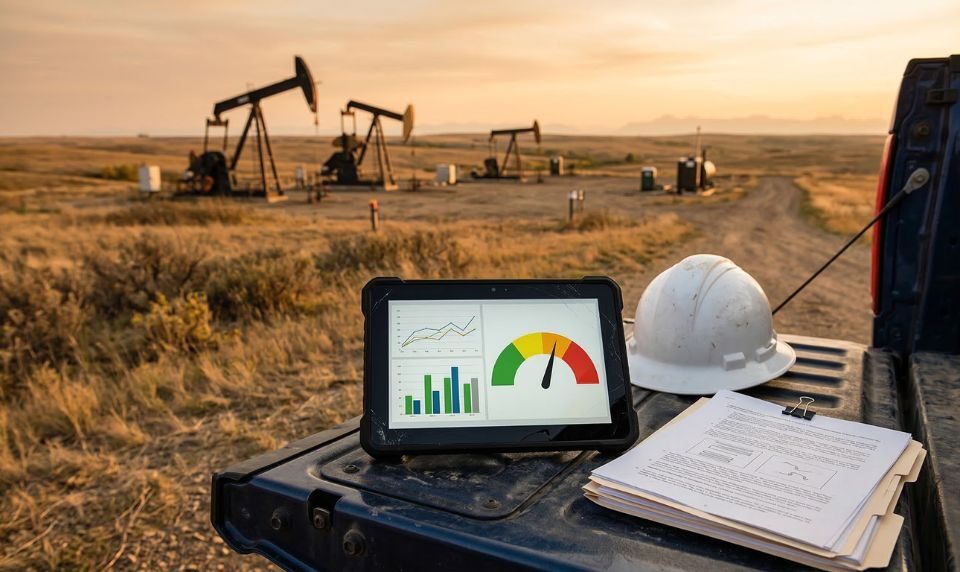
Offline data collection for remote well sites. Canadian well sites are frequently remote, with limited or no cellular connectivity. If the platform requires constant internet access, field data will continue arriving late. Mobile data entry with photo capture, GPS tagging, and automatic synchronization when connectivity returns should be core functionality, not an optional add-on.
A genuine single source of truth. If you still need to export data to spreadsheets for analysis or reporting, the system is not delivering on its end-to-end promise. Look for built-in reporting, dashboards, and the ability to generate regulatory submissions directly from the platform. The goal is one system where every team member, from field operator to office manager to executive, accesses the same current data.
Scalable pricing that fits your operation. Enterprise platforms designed for major producers with dedicated IT teams may be overbuilt and overpriced for a company managing 200 wells. Conversely, a lightweight field tool may not handle the complexity of a multi-province, multi-thousand-well portfolio. Match the platform to your scale today with room to grow.
The Cost of Getting It Wrong
Choosing the wrong approach, or avoiding the decision altogether, carries real consequences.
Regulatory penalties compound. Missed compliance deadlines or inaccurate reporting can result in fines, licence restrictions, or increased scrutiny under the AER’s new Licensee Management Program. The oil and gas industry challenges facing Canadian operators are not getting simpler. Every new directive adds documentation requirements that fragmented systems handle poorly.
Abandonment costs escalate without planning. Without accurate lifecycle data feeding into ARO forecasts, operators consistently underestimate abandonment costs. The AER itself acknowledges that its reclamation cost estimates are likely too low. Operators who cannot access complete well histories when planning abandonments pay the premium.
Operational time gets consumed by data management. When well data is scattered across tools, teams spend more time searching for information than acting on it. Jim Gordon, HSE Manager at Whitecap Resources Inc., describes the alternative: “Fieldshare means quick data input and quick data retrieval. It gives me the tools I need to monitor everything and drive KPIs.” Whitecap achieved a 70% reduction in data management time after centralizing their tracking.
Knowledge loss becomes permanent. Every experienced employee who leaves without their operational context being captured in a durable system takes that context permanently. For wells that will be managed for decades, this represents a compounding loss that gets more expensive with each departure.
Making the Decision
End-to-end oil well asset management is not a luxury for Canadian operators. It is a practical necessity driven by the AER’s new lifecycle management framework, growing ARO liabilities, tightening capital budgets, and the reality that wells must be managed across decades and vast geographies.
The right platform connects planning data to production records to abandonment estimates in one system, with Canadian regulatory alignment built in rather than bolted on. It works offline at remote well sites, maintains complete audit trails for regulatory scrutiny, and survives the staff turnover that every operator faces.
Ready to see how end-to-end management works in practice? Request a demo to explore how Fieldshare connects every stage of well asset management for Canadian operators.