introductionOil and Gas Industry Challenges: 5 Reshaping Canadian Operations
The oil and gas industry has always operated in cycles. Prices rise and fall. Regulatory frameworks tighten and occasionally loosen. Technology creates new opportunities while making old approaches obsolete.
What makes the current environment different for Canadian operators is the convergence of multiple oil and gas industry challenges hitting at once. It is not one dominant pressure. It is five interconnected ones that compound each other. Drilling activity is forecast to drop 9% nationally in 2025 with a further 4% decline in 2026, according to Enserva’s State of the Industry report. WTI is averaging roughly US$61 per barrel, down from US$76 in 2024. And none of the three major forecasting agencies expect oil prices to recover before 2029.
Here are the five challenges reshaping how Canadian operators run their businesses, and what they mean for your operation.
Challenge 1: Production Restarts Are More Complex Than Expected
When commodity prices crashed in 2020, operators across Western Canada shut in thousands of wells. Bringing that production back online has proven far more difficult than reversing the shutdown process.
The physical reality is harsh. Wells that sit idle for extended periods do not simply resume at previous rates. Reservoir conditions change. Downhole equipment degrades. Surface facilities need inspection and maintenance before restart. According to the Canadian Association of Petroleum Producers, restart costs frequently exceed initial shutdown estimates by 30 to 50%. Some wells never return to pre-shutdown production levels, forcing operators to write down asset values.
The workforce gap compounds the problem. The industry lost experienced personnel during the downturn. Retirement accelerated. Career changes became permanent. Nearly 50% of the Canadian oil and gas workforce is expected to retire within the next decade. Only 12% is under 30, while 45% is over 50. When operators needed to scale back up, the workers who knew the quirks of specific fields and facilities were gone.
The data gap makes everything slower. Many operators discovered that their documentation of shut-in assets was incomplete. Production histories, maintenance records, and facility configurations were scattered across systems or locked in the memories of departed employees. Teams report spending weeks reconstructing basic asset information before restart planning could even begin.
This experience has driven renewed interest in systematic oil and gas asset management approaches that maintain documentation regardless of operational status.
Challenge 2: Regulatory and Environmental Pressures Keep Intensifying
The regulatory environment for Canadian oil and gas has never been static. But the pace of change in 2025 and 2026 has accelerated well beyond what most operators anticipated.
The AER overhauled its entire liability management framework. In February 2025, the Alberta Energy Regulator released new editions of Directive 001, Directive 011, Directive 068, and Directive 088: Licensee Life-Cycle Management. The old LMR (Liability Management Rating) is no longer calculated or used by the AER for any purpose. Three legacy programs were rescinded. In their place, the AER introduced the Licensee Capability Assessment, the Licensee Management Program, and the Inventory Reduction Program with closure quotas and closure nominations.
For operators, this means the compliance framework they spent years learning has been replaced. The new system assesses capabilities and performance across the full energy development lifecycle. Some assessment results will be publicly available. The documentation requirements are broader than what the LMR system demanded.
BC is under scrutiny for enforcement gaps. A 2025 investigation by The Narwhal analyzed over 40,000 internal BCER inspection records and found more than 1,100 instances where sites documented as non-compliant were later marked compliant in official records. The BCER operates with just 17 government inspectors overseeing 170 companies. Documentation integrity is not a theoretical concern. It is an active enforcement issue.
Federal emissions regulations add another layer. Canada’s oil and gas emissions cap, announced in November 2024, phases in between 2026 and 2029. Large operators must register and report starting in 2027. The first compliance period runs 2030 to 2032, with a cap set at 27% below 2026 emissions. Enhanced methane regulations finalized in December 2025 target a 72% methane reduction by 2030.
Operators who struggle to produce complete safety audit documentation today will face compounding pressure as these new frameworks take effect.
Challenge 3: Asset Retirement Obligations Are Growing Faster Than Budgets
Asset retirement obligations have moved from a line item on financial statements to a defining strategic challenge for Canadian operators.
The numbers are staggering. Industry-wide closure liabilities in Alberta sit between $30 billion and $60 billion, depending on whether pipelines are included. Conventional oil and gas liabilities alone reached $36 billion as of June 2024, up from $33.1 billion the previous year. The AER itself acknowledges that its reclamation cost estimates are likely too low, meaning the actual liability is understated.
Inactive well liabilities add $12.3 billion to the picture. That figure jumped $854 million in a single update when the AER revised well decommissioning cost estimates in Bulletin 2024-16. Alberta has over 78,000 inactive wells and more than 99,000 marginal wells producing less than 10 barrels of oil equivalent per day. As of September 2024, 12,289 suspended wells were not in compliance with AER requirements.
The orphan well problem is growing. The Orphan Well Association’s 2024/2025 annual report shows cleanup costs reaching an all-time high of $1.12 billion. Orphan wells needing cleanup nearly doubled to 3,388, largely driven by the Sequoia Resources bankruptcy. The annual industry levy of $144.5 million covers less than a quarter of actual cleanup costs. The estimated cleanup timeline has been pushed out from 2036 to 2037 through 2040.
Operators managing ARO liabilities in spreadsheets face a particular risk. When the AER’s new Licensee Capability Assessment evaluates your closure performance, incomplete or inconsistent records undermine your standing. Purpose-built ARO forecasting software connects field data to financial models so your numbers hold up under regulatory scrutiny.
Challenge 4: The Energy Transition Creates Strategic Uncertainty
The global energy transition affects Canadian oil and gas operators regardless of their individual views on climate policy. Market dynamics, financing conditions, and competitive pressures all reflect transition realities.
Investment horizons are shortening. Lenders and investors increasingly question long-duration oil and gas investments. Capital spending is expected to decline 5.6% in 2025 and a further 2.2% in 2026, according to Enserva. Projects with 20-year payback horizons face scrutiny that shorter-duration investments avoid.
Asset values face new pressure. The concept of stranded assets has moved from academic debate to practical consideration. Regulators, auditors, and investors now expect operators to demonstrate that asset valuations account for transition scenarios. This scrutiny affects acquisition decisions, financial reporting, and strategic planning. Operators need defensible documentation of asset conditions and production potential.
ESG documentation is now table stakes. The Competition Bureau released final guidelines on environmental claims in 2025, requiring proper testing or recognized methodologies to support ESG assertions. Government policy has been ranked as the oil and gas sector’s top risk for seven consecutive surveys. Whether public or private, operators pursuing financing or exit transactions find that ESG documentation has become a standard due diligence requirement.
New competitive dynamics are emerging. Indigenous investment in energy infrastructure is accelerating. In May 2025, the Canada Indigenous Loan Guarantee Corporation issued its first guarantee, covering $400 million of a $736 million investment by 36 First Nations in Enbridge’s Westcoast natural gas pipeline system. Operators who build strong community relationships and transparent documentation practices position themselves well for this evolving landscape.
Challenge 5: Digital Transformation Remains Incomplete
The oil and gas industry has invested heavily in digital technology. But most operators have captured only a fraction of the potential value.
The data quality problem is widespread. A Hexagon industry survey found that 73% of oil and gas executives report poor data quality has a severe or strong impact on their business performance. Meanwhile, 68% of leaders receive delayed or outdated information, and 69% say manual processes strongly affect their ability to meet performance goals.
The market recognizes the gap. The oil and gas data management market was valued at US$19 billion in 2023 and is projected to reach US$60.3 billion by 2030. That growth reflects how much of the industry still runs on disconnected systems.
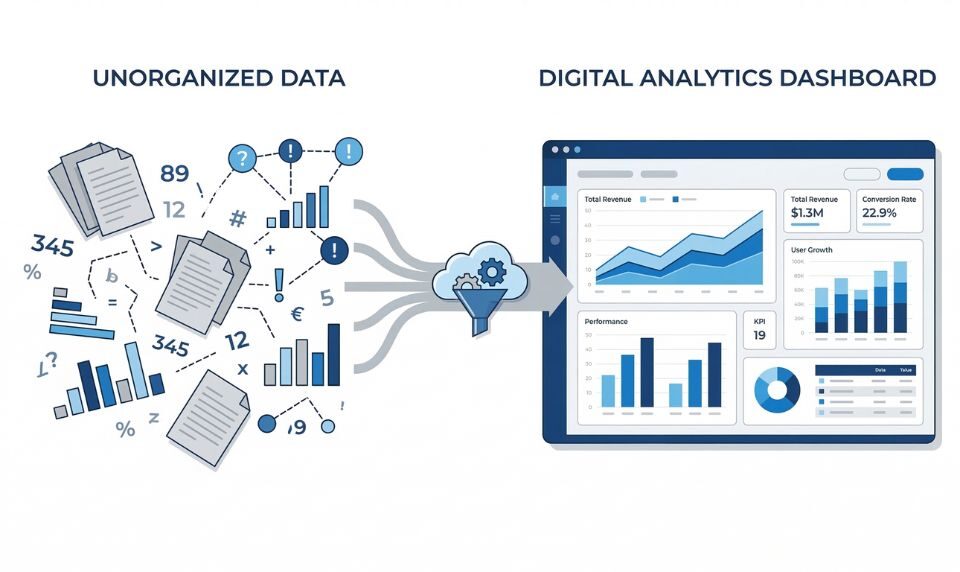
Spreadsheets remain the default for too many operators. Production data lives in one spreadsheet. Maintenance records in another. Regulatory filings somewhere else. Financial information in yet another system. When data requires manual reconciliation across systems, errors multiply and decisions slow down. Operators still relying on Excel for oil field data management face a compounding disadvantage with every new regulatory requirement.
Jim Gordon, HSE Manager at Whitecap Resources Inc., describes the impact of eliminating this fragmentation: “Fieldshare means quick data input and quick data retrieval. It gives me the tools I need to monitor everything and drive KPIs.” Whitecap achieved a 70% reduction in data management time after implementing centralized tracking.
conclusionMoving Forward: Better Data Is the Common Thread
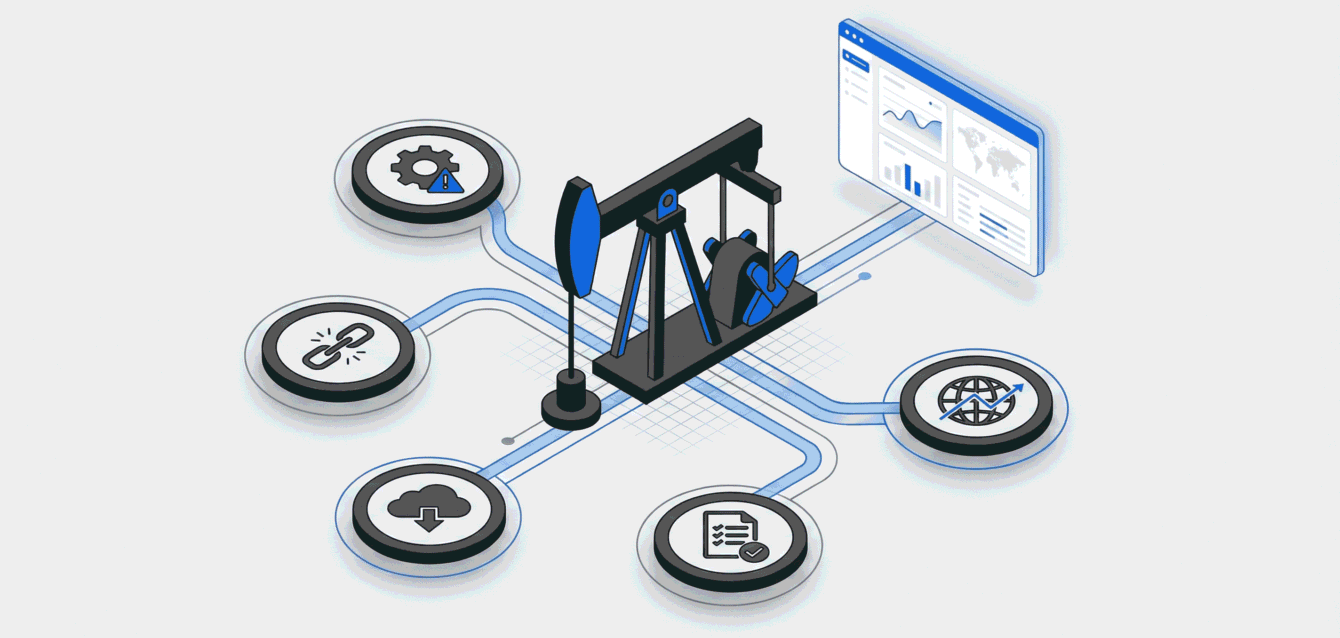
These five oil and gas industry challenges share a common thread. They all create demands for better information management. Restart planning requires complete asset documentation. The new AER framework requires systematic compliance tracking. ARO management requires defensible financial modeling. Strategic planning requires reliable data. And digital transformation requires connected systems.
The operators who address their information management foundations now will be positioned to handle whatever the next five years bring. Those who continue with fragmented, manual approaches will find each new challenge harder to address.
Ready to see how integrated data management supports better responses to industry challenges? Request a demo to explore how Fieldshare connects field data, compliance tracking, and asset management in one platform.