introductionAER Liability Tracker: What It Is and Why Every Operator Needs One
If you operate oil and gas wells in Alberta, your liability profile is one of the most consequential numbers attached to your business. It determines whether you can transfer licences, acquire new assets, or avoid mandatory security deposits that tie up your operating capital. And yet, many operators still track this information reactively, buried across disconnected spreadsheets, outdated reports, and assumptions that have not been updated in years.
An AER liability tracker is a system, whether built in-house or through purpose-built software, that gives operators a clear, current picture of their total liability exposure under the Alberta Energy Regulator’s framework. It is not optional. It is the difference between managing your business proactively and getting a letter from the AER that forces your hand.
This guide explains what AER liability tracking means, how the system works, what happens when your numbers slip, and why oil and gas asset management that includes liability tracking is no longer a nice-to-have for Alberta operators.
What Is AER Liability Tracking?
AER liability tracking refers to the ongoing process of monitoring and managing the financial obligations tied to your oil and gas assets in Alberta. Every well, facility, and pipeline you operate carries an estimated cost for eventual abandonment and reclamation. The AER assigns these costs through standardized formulas, and your total liability profile directly affects your regulatory standing.
Tracking this liability means understanding three things at all times:
- What the AER says you owe. The regulator’s estimated cost to abandon and reclaim every asset you hold.
- What you actually owe. The real-world cost, which is often significantly higher than the AER’s standardized estimates.
- Where you stand relative to your obligations. Whether your productive capacity and financial health are sufficient to cover those costs, or whether you are heading toward regulatory intervention.
For years, this tracking happened through a system called the Liability Management Rating. That system has since been replaced, but the core principle remains: the AER needs to know that you can pay for your cleanup, and you need to prove it.
How the Liability Management Rating (LMR) System Worked
The LMR was the AER’s primary tool for assessing whether an operator could cover its cleanup obligations. Understanding how it worked is essential context for any Alberta operator, even though the system has been replaced with a broader framework.
The LMR formula was straightforward:
LMR = Deemed Assets / Deemed Liabilities
An LMR of 1.0 meant your deemed assets exactly matched your deemed liabilities. Above 1.0 meant you had a cushion. Below 1.0 meant your estimated cleanup costs exceeded your productive capacity, and that triggered consequences.
Deemed assets were calculated by taking your oil and gas production over the previous 12 months (measured in cubic metres of oil equivalent) and multiplying that by the industry’s three-year average netback (revenue minus operating costs). This meant that when commodity prices dropped or production declined, your deemed assets shrank, even if your actual financial position was stable.
Deemed liabilities were the AER’s standardized estimates for abandoning and reclaiming every well, facility, and pipeline tied to your licences. The AER used regional cost averages published under Directive 011 to calculate these figures rather than site-specific assessments. This created a significant gap between what the AER said your cleanup would cost and what it would actually cost.
What Happened When Your Rating Dropped Below 1.0
Falling below 1.0 was not a minor administrative issue. It triggered a cascade of regulatory consequences that could constrain your entire operation.
Mandatory security deposits. The AER required you to post a security deposit covering the gap between your deemed liabilities and your deemed assets. This was real money, pulled from your operating capital and held by the regulator as a financial guarantee. For companies already under financial pressure (which is typically what causes the LMR to drop), coming up with a deposit added strain to an already difficult situation.
Licence transfer restrictions. An LMR below the threshold meant the AER could block your licence transfers. If you wanted to sell assets, acquire new wells, or restructure your portfolio, the transfer would not be approved unless security deposits were posted to bring the post-transfer LMR into compliance for both buyer and seller. This effectively froze your ability to optimize your portfolio when you needed it most.
Escalating enforcement actions. Operators who failed to meet security deposit requirements and did not submit acceptable compliance plans faced escalating enforcement. The most severe outcome was a shut-in order, where the AER forced the company to stop producing from its wells. A shut-in order does not reduce your liabilities. It eliminates your revenue while keeping your cleanup obligations fully intact.
The Problem No One Talks About: AER-Assessed vs Actual Liability
Here is where liability tracking becomes critical beyond just meeting regulatory thresholds.
The AER’s deemed liability calculations use standardized regional cost estimates. These figures are designed to be administratively workable across hundreds of thousands of wells, but they consistently underestimate actual abandonment and reclamation costs.
How significant is the gap? In 2018, the AER’s publicly reported estimate for total oil and gas cleanup in Alberta was $58 billion. An internal AER presentation by Robert Wadsworth, then Vice President of Closure and Liability, put the figure at approximately $260 billion. That is roughly 4.5 times the public number. The internal documents noted even $260 billion was “likely less than the actual cost.”
For individual operators, this means something very specific: your AER-assessed liability is almost certainly lower than what it would actually cost to abandon and reclaim your wells. The AER’s standardized costs do not account for site-specific variables like well depth, contamination extent, environmental field services complexity, or the terrain and access challenges at remote Alberta locations.
Operators who track only their AER-assessed liability are looking at an incomplete picture. The ones who track actual estimated costs, updated with site-specific data, are the ones who avoid financial surprises.
What Changed: Alberta's New Liability Management Framework
In February 2025, the AER officially retired the LMR system and replaced it with a broader Liability Management Framework under Directive 088. The old ratio-based approach is gone. What replaced it is more demanding.
Mandatory closure spending targets. Every operator with inactive wells must now meet annual closure spending targets. The industry-wide target for 2026 is $750 million in closure spending across all licensees. Each company receives an individual target based on its inactive well inventory. This shifts the model from “maintain your ratio and you are fine” to “actively spend money cleaning up your inactive wells every year or face consequences.” Understanding the end-to-end oil well asset management lifecycle, including the closure stage, is now a regulatory requirement.
Holistic licensee assessments. The AER now conducts holistic financial assessments of licensees rather than relying solely on the deemed asset/deemed liability ratio. These assessments can be triggered by licence transfer applications, new project proposals, signs of financial distress, or proactive regulatory review. The assessment looks at your full financial picture: financial statements, operational performance, liability exposure, and closure track record. This is broader and more subjective than the old LMR calculation, which means operators need better documentation and clearer visibility into their own numbers.
Why Every Alberta Operator Needs to Actively Track Liability
Liability tracking is not just for companies in financial trouble. Here is why every Alberta operator needs an active AER liability tracker in place.
The regulatory environment is tightening, not loosening. Mandatory closure spending targets, holistic assessments, and the retirement of the ratio-based system all point in one direction: the AER expects more from operators, not less. Companies that follow well management best practices already understand that proactive management is always cheaper than reactive compliance.
Acquisitions and divestitures require clear liability data. Every licence transfer now triggers potential AER scrutiny. If you want to buy or sell assets, you need current, defensible liability numbers for every well in the transaction. Incomplete data slows deals, kills negotiations, or results in post-closing surprises.
The gap between assessed and actual costs is a financial risk. Budgeting based on AER-assessed liability alone leaves you exposed to the real costs when abandonment and reclamation actually happen. Operators who track actual estimated costs can plan financially, set aside reserves, and avoid the cash flow shock that comes from a $500,000 reclamation bill on a well that was assessed at $150,000.
Inactive wells are now a measurable liability. Under Directive 088, every inactive well in your inventory carries a closure spending obligation. The more inactive wells you hold without a closure plan, the larger your mandatory annual spend target becomes. Tracking which wells are inactive, which are approaching dormancy deadlines, and which should be prioritized for closure is no longer optional.
The orphan well problem keeps growing. The Orphan Well Association’s inventory has grown from 162 wells in 2014 to over 3,800 in 2025. The industry levy reached $144.45 million in 2025. Total estimated OWA cleanup costs hit $1.12 billion. Every operator pays into this fund, and the levy increases as more wells become orphaned. Actively managing your own liability reduces the industry-wide burden and your share of the costs.
The Consequences of Ignoring Liability Tracking
Operators who do not track their liability exposure face compounding consequences.
Financial surprises. Without current liability data, abandonment and reclamation costs arrive as unplanned expenses. A single complex well closure can cost several hundred thousand dollars. Multiply that across a portfolio of inactive wells, and the financial impact is material.
Blocked transactions. Licence transfers require the AER to assess both parties. If your liability data is incomplete, outdated, or misaligned with the AER’s records, the transaction stalls. Buyers walk away. Sellers lose leverage.
Regulatory enforcement. Missing your mandatory closure spending target under Directive 088 triggers regulatory consequences. The AER has the authority to impose conditions, require security deposits, or escalate to enforcement actions. Operators who cannot demonstrate they are meeting their targets because they are not tracking them properly are the most vulnerable.
Insolvency risk. In the most severe cases, unmanaged liability contributes to insolvency. When a company becomes insolvent, its wells transfer to the Orphan Well Association, the operator loses its assets, and the industry collectively absorbs the cleanup costs through higher levies.
How Digital Tracking Tools Help Operators Stay Ahead
Managing AER liability across a portfolio of wells using spreadsheets is how most operators started. It is also how most operators fall behind. Spreadsheets do not update themselves. They do not flag missed deadlines. And they do not provide the portfolio-level visibility that the new regulatory framework demands.
Purpose-built ARO forecasting software and broader asset management platforms solve these problems structurally.
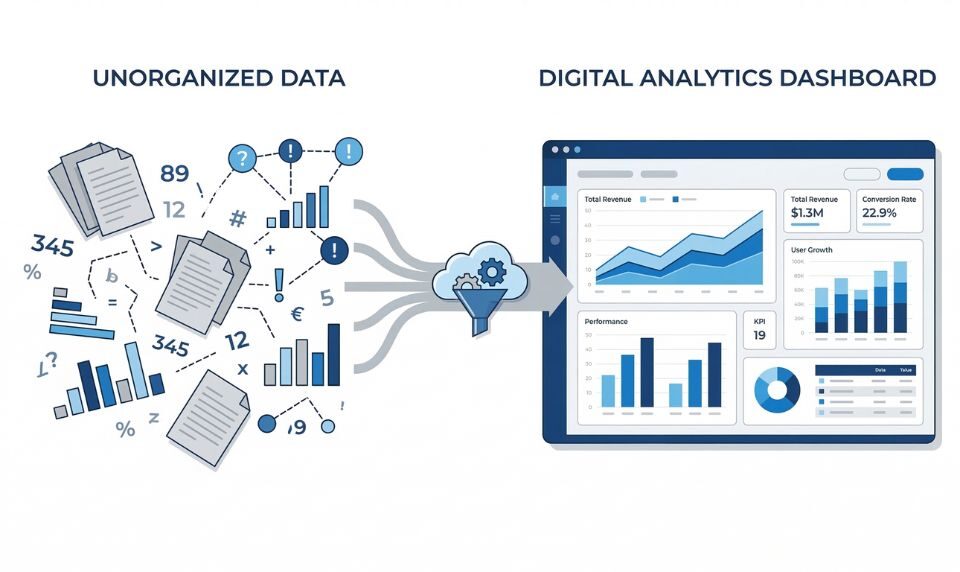
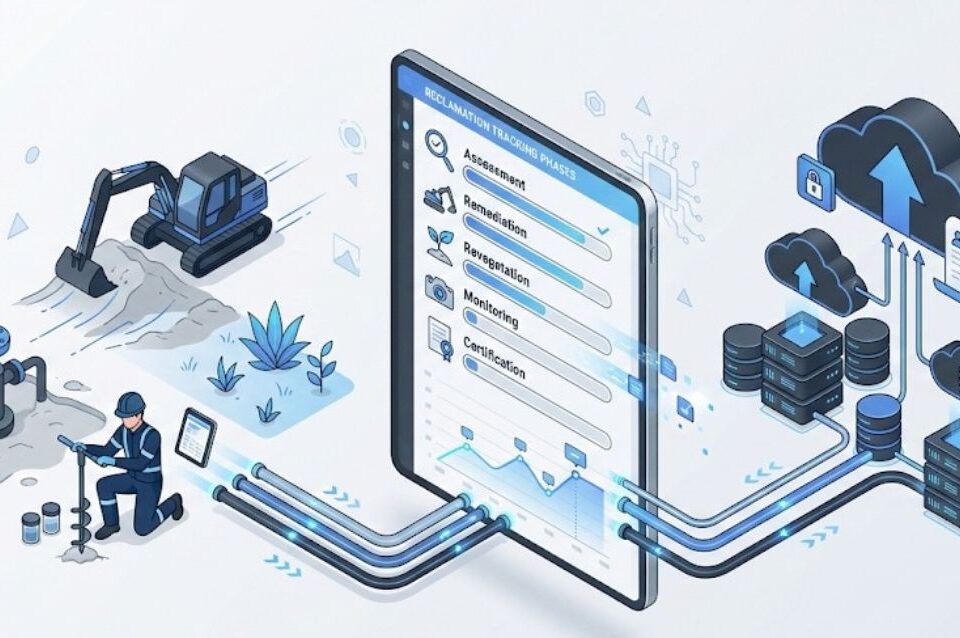
Centralized liability data. Every well, facility, and pipeline in your portfolio has its liability data in one place. AER-assessed costs, actual estimated costs, closure status, compliance deadlines, and historical records are all accessible from a single dashboard. No more hunting through spreadsheets to answer “what is our total liability exposure right now?”
Automated deadline and compliance monitoring. The software tracks regulatory deadlines, dormancy timelines, and mandatory closure spending targets automatically. When a deadline approaches, the system flags it. When a well crosses a compliance threshold, you know about it before the AER does.
Portfolio-level visibility. Instead of looking at individual wells in isolation, digital tools provide portfolio-level views showing your total liability exposure, the distribution of inactive vs active wells, closure spending progress against targets, and trend data over time. This is the visibility that the AER’s holistic assessments now expect you to have.
Scenario planning and forecasting. Thinking about acquiring a block of wells? The software can model how that acquisition would affect your total liability profile and closure spending obligations. Considering divesting non-core assets? Run the scenario and see how the transaction changes your exposure. Operators evaluating their options can also reference our guide on how to choose a system for reclamation tracking.
Audit-ready reporting. When the AER requests documentation for a holistic assessment, licence transfer review, or compliance audit, the data should be ready. Digital platforms generate formatted reports directly from the system, eliminating the days or weeks of report compilation that spreadsheet-based operators face during audit season.
Jim Gordon, HSE Manager at Whitecap Resources Inc., describes the impact: “Fieldshare means quick data input and quick data retrieval. It gives me the tools I need to monitor everything and drive KPIs.” Whitecap achieved a 70% reduction in data management time after moving away from fragmented tracking systems.
conclusionNext Step
AER liability tracking is not a back-office administrative task. It is a core operational function that affects your regulatory standing, your ability to transact, your financial planning, and ultimately your company’s viability as an Alberta oil and gas operator.
The old LMR system gave operators a single number to watch. The new framework under Directive 088 demands more: active closure spending, holistic financial transparency, and the ability to demonstrate that you are managing your obligations proactively. Alberta now has roughly 470,000 well licences, 78,000 to 90,000 inactive wells, and an orphan well inventory that has grown over 2,000% in the last decade. The AER is paying closer attention to every operator’s liability profile, and the consequences of falling behind are getting steeper.
The oil and gas industry challenges facing Alberta operators all share a common thread: better information management is no longer optional. Operators who build defensible liability tracking systems now will be positioned to handle whatever the next five years bring.
Ready to see how centralized liability tracking works for your portfolio? Request a demo to explore how Fieldshare handles AER liability tracking, closure planning, and portfolio-level visibility for Alberta operators.