introductionARO Compliance & Forecasting Software for Canadian Oil & Gas Operators
Asset retirement obligations represent one of the most complex financial challenges in the oil and gas industry. These liabilities, which cover well abandonment, site remediation, and surface reclamation, require accurate forecasting across time horizons that can stretch decades into the future.
The challenge is not simply estimating costs. It is maintaining accuracy as regulations evolve, operational conditions change, and portfolios shift through acquisitions and divestitures. Oil and gas ARO forecasting software addresses these challenges by connecting field data to financial projections in ways that spreadsheets simply cannot match.
This guide examines why ARO forecasting has become increasingly difficult, where traditional approaches fail, and how purpose-built software creates defensible, auditable liability management.
Why ARO Forecasting Has Become More Complex
The fundamentals of asset retirement have not changed. Wells eventually require abandonment. Sites need remediation. Surfaces must be reclaimed. What has changed is the regulatory and financial scrutiny applied to these obligations.
Evolving Regulatory Frameworks
Provincial regulators have tightened requirements around liability management. The Alberta Energy Regulator’s Directive 088 establishes the Licensee Liability Rating (LLR) program that directly impacts an operator’s ability to transfer licenses, acquire new assets, or continue operations.
Operators whose deemed liabilities exceed deemed assets face mandatory security deposits and restricted operational flexibility. This creates direct financial consequences for ARO estimation accuracy.
Similar frameworks exist across other Canadian jurisdictions, and the trend points toward stricter rather than looser requirements. Operators who underestimate liabilities face not just eventual cost overruns but immediate regulatory constraints.
Financial Reporting Standards
IAS 37 and related accounting standards require organizations to recognize provisions for asset retirement at the point when obligations arise, not when abandonment occurs. This means ARO estimates appear on balance sheets and face auditor scrutiny.
Auditors expect documented assumptions, defensible cost estimates, and clear methodology. They ask questions that spreadsheet-based systems struggle to answer: How were these estimates derived? What data supports these assumptions? When were calculations last updated?
Portfolio Complexity
Modern operators rarely maintain static portfolios. Acquisitions bring new wells with unknown abandonment histories. Divestitures transfer liabilities that require accurate documentation. Joint ventures create shared obligations requiring allocation methodologies.
Each transaction requires ARO recalculation and supporting documentation. The Orphan Well Association exists precisely because historical liability management failures left wells without responsible parties.
Where Spreadsheet-Based Approaches Fail
Most operators began tracking ARO with spreadsheets. The approach made sense when portfolios were smaller, regulatory requirements simpler, and audit scrutiny less intense. Today, spreadsheet-based management creates risks that compound over time.
Version Control and Data Integrity
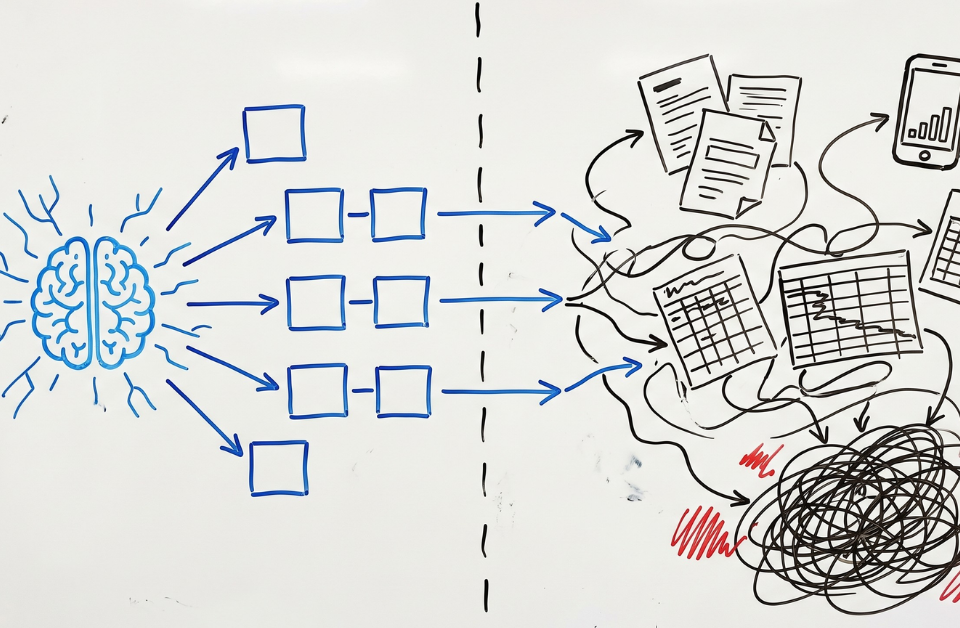
ARO calculations require inputs from multiple sources: field observations about well conditions, engineering estimates about abandonment requirements, financial assumptions about cost escalation, and regulatory parameters about compliance timelines.
When these inputs live in separate spreadsheets, maintaining consistency becomes a manual exercise. Different team members update different files. Assumptions change in one location but not others. The reconciliation effort before each reporting period reveals discrepancies that require investigation.
Jim Gordon, HSE Manager at Whitecap Resources Inc., describes the broader data challenge: “Fieldshare means quick data input and quick data retrieval. It gives me the tools I need to monitor everything and drive KPIs.”
This accessibility proves especially critical for ARO management, where field observations about well conditions directly inform liability estimates.
Incomplete Historical Records
Accurate ARO forecasting requires understanding each well’s complete history: original completion details, subsequent workovers, current production status, and accumulated environmental observations. Many operators discover gaps in this historical record only when preparing for audits or transactions.
Spreadsheet systems typically track what someone thought to include when the spreadsheet was created. Wells that predate the tracking system may have incomplete records. Information that seemed unimportant at drilling time may prove essential for abandonment planning decades later.
Disconnected Field and Financial Data
ARO estimates depend on field conditions. A well with casing integrity issues requires different abandonment procedures than one with intact infrastructure. Surface contamination affects remediation costs. Downhole conditions influence plugging requirements.
In spreadsheet-based systems, this field data typically exists separately from financial calculations. Someone must manually translate field observations into cost implications, a process that introduces delay, interpretation differences, and potential errors.
Audit Trail Gaps
When auditors ask how an ARO estimate was derived, they expect to trace the calculation back to source data. They want to see when assumptions were last updated, who made changes, and what documentation supports key judgments.
Spreadsheets provide limited audit trail capability. Cell formulas show current calculations but not historical states. Comments may document some assumptions but rarely capture the full chain of reasoning. Meeting notes about estimation discussions may exist somewhere but rarely link directly to specific calculations.
How Purpose-Built Software Addresses ARO Challenges
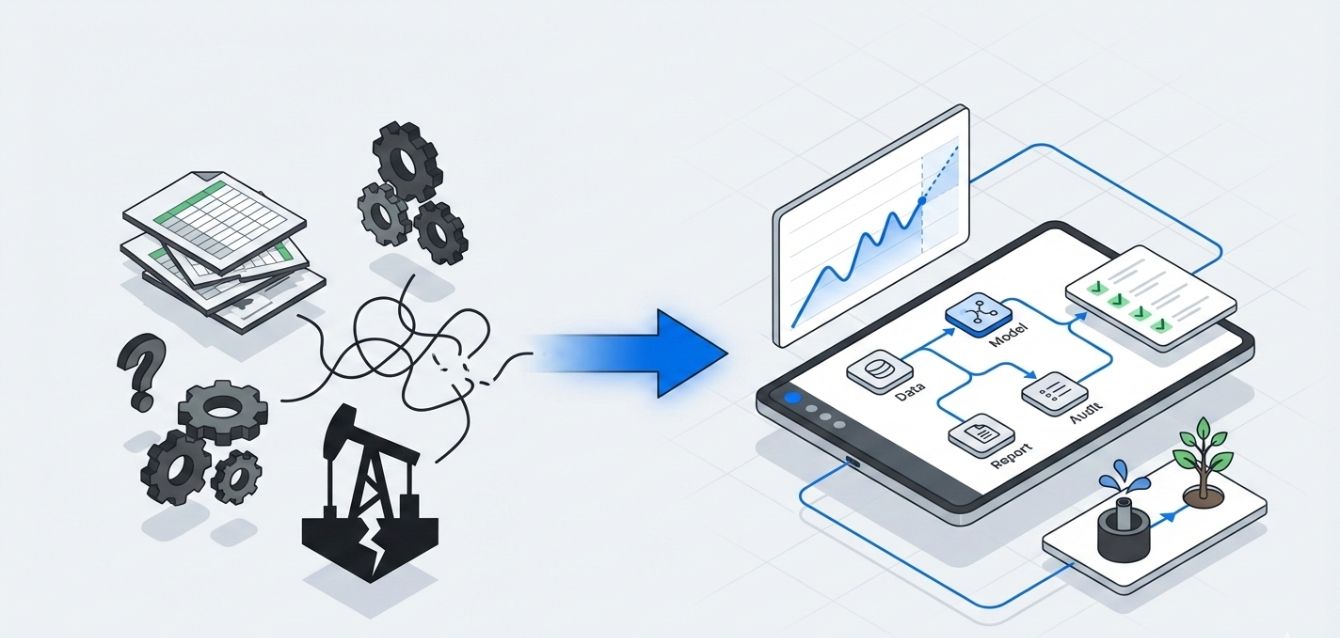
Oil and gas ARO forecasting software does not simply digitize spreadsheet processes. It fundamentally restructures how liability data flows from field observations through financial reporting.
Centralized Asset Repository
Every well, facility, and site lives in a single system with complete historical records. Field observations connect to the same assets that appear in financial calculations. When a field technician notes casing deterioration, that observation links to the well record that drives ARO estimates.
This centralization eliminates the reconciliation exercises that consume time before each reporting period. There is one source of truth about asset conditions and one set of liability calculations derived from that source.
Dynamic Cost Modeling
Rather than static spreadsheet formulas, software enables dynamic cost models that update as conditions change. Regulatory cost indices can feed directly into calculations. Regional variations in contractor availability can inform estimates. Complexity factors based on well characteristics can adjust base costs automatically.
When the Alberta Energy Regulator updates its area-based closure cost estimates, that change can flow through the system to affected wells without manual recalculation of individual entries.
Field-to-Finance Integration
Environmental restoration tracking and liability management require the same underlying data about site conditions. Software that connects these functions ensures that field observations about contamination, infrastructure condition, and access constraints inform both operational planning and financial forecasting.
This integration means ARO estimates reflect current field reality rather than assumptions that may have been valid when estimates were originally prepared but have since become outdated.
Complete Audit Documentation
Every calculation in a properly designed system includes full traceability. Auditors can see which data elements contributed to each estimate, when those elements were last updated, and who made changes. Assumption documentation links directly to the calculations those assumptions support.
This audit readiness does not require special preparation before audit periods. The documentation exists because the system generates it automatically as part of normal operations.
Implementing Effective ARO Management
Transitioning from spreadsheet-based to software-based ARO management requires thoughtful implementation. The most successful transitions share common characteristics.
Data Migration Planning
Existing spreadsheet data has value despite its limitations. Effective implementation includes careful migration of historical records, with validation to identify and address data quality issues rather than simply transferring problems to the new system.
Organizations report that the migration process itself often reveals data quality issues that would eventually have caused problems regardless of what system housed the data.
Process Integration
ARO management connects to multiple organizational functions: field operations, engineering, accounting, regulatory affairs. Software implementation should include these stakeholders in design decisions to ensure the system supports actual workflows rather than idealized processes.
Anna Charbonneau, Senior Environmental Engineer at Whitecap Resources Inc., emphasizes the importance of this integration: “One of the things I most appreciate about Fieldshare is the technical support. We have the opportunity to know the developers assigned to our program personally, and we work together on solutions for program management.”
Ongoing Maintenance
ARO data requires continuous updating as field conditions change, regulatory requirements evolve, and portfolio composition shifts. Implementation planning should address who will maintain data, how updates will flow into the system, and what review processes will ensure ongoing accuracy.
Strategic Benefits Beyond Compliance
While regulatory and audit requirements drive many ARO software implementations, the benefits extend beyond compliance.
Transaction Support
Accurate ARO documentation supports both acquisitions and divestitures. Buyers gain confidence in liability assumptions when they can trace estimates to documented methodology. Sellers can defend valuations against due diligence challenges.
Organizations with robust ARO systems report smoother transactions with fewer post-closing disputes about liability allocation.
Operational Planning
Understanding true abandonment costs informs operational decisions. Wells approaching economic limits can be evaluated against realistic closure costs rather than placeholder assumptions. Capital allocation between production enhancement and abandonment can reflect actual obligations.
Financial Forecasting
Reliable ARO data supports better financial planning. Cash flow projections can incorporate realistic abandonment spending. Balance sheet provisions can be adjusted proactively rather than through year-end corrections.
Whitecap Resources Inc. documented 70% reduction in data management time after implementing centralized tracking. That efficiency gain translates directly to faster, more accurate ARO calculations with time available for analysis rather than data assembly.
conclusionMoving Forward
ARO forecasting challenges will continue intensifying as regulatory frameworks evolve and audit expectations increase. The operators who address their oil and gas industry challenges through systematic data management position themselves for whatever specific requirements emerge.
The question facing most operators is not whether current spreadsheet approaches are adequate. Most already know they are not. The question is whether to address the problem proactively or wait until audit findings, regulatory constraints, or transaction complications force the issue.
Purpose-built asset management software provides a path forward. Organizations that make the transition report not just compliance improvements but operational benefits that extend across their liability management functions.
Ready to see how centralized ARO tracking works in practice? Request a demo to explore how integrated data management supports defensible liability forecasting.