introductionWell Management Best Practices for Canadian Oil & Gas Operators
Managing oil and gas wells effectively is one of the most complex challenges facing Canadian operators today. From the initial drilling phase through decades of production and eventual decommissioning, each well demands consistent attention, accurate data, and strategic decision-making.
Poor well management leads to costly consequences: unplanned downtime, compliance violations, safety incidents, and millions in unexpected asset retirement obligations. Yet many operators still rely on fragmented systems spreadsheets here, paper records there, and institutional knowledge locked in the heads of experienced staff.
This guide covers proven well management best practices that Canadian operators are using to improve efficiency, maintain compliance, and extend the productive life of their assets.
What is Well Management in Oil and Gas?
Well management encompasses all activities involved in planning, operating, maintaining, and eventually decommissioning oil and gas wells. It spans the entire well lifecycle:
- Drilling and completion – Initial well construction and preparation for production
- Production optimization – Maximizing output while minimizing costs
- Maintenance and workover – Keeping wells operating safely and efficiently
- Integrity management – Monitoring well condition to prevent failures
- Compliance and reporting – Meeting regulatory requirements
- Abandonment and reclamation – Safely decommissioning wells at end of life
Effective well management requires coordination across multiple disciplines: engineering, operations, finance, regulatory affairs, and field personnel. The data generated at each stage must flow seamlessly between these groups.
Why Well Management Matters for Canadian Operators
Regulatory Complexity
Canadian operators face a unique regulatory environment. The Alberta Energy Regulator (AER), BC Energy Regulator, and Saskatchewan’s Ministry of Energy and Resources each have specific requirements for:
- Well integrity testing and reporting
- Production reporting and royalty calculations
- Environmental monitoring and compliance
- Asset retirement obligations (ARO) and Licensee Liability Rating (LLR)
- Orphan well levies and liability management
Non-compliance can result in enforcement actions, financial penalties, and restrictions on new drilling licences.
Financial Pressures
With volatile commodity prices, operators must maximize efficiency. Well management directly impacts:
- Operating costs – Poorly maintained wells cost more to operate
- Production revenue – Optimization opportunities are missed without good data
- Capital allocation – Without accurate well data, investment decisions are guesswork
- Liability exposure – Unmanaged ARO obligations create balance sheet risks
Aging Infrastructure
Many Canadian wells are decades old. The AER reports over 170,000 inactive wells in Alberta alone. Managing aging assets requires detailed historical records and proactive integrity monitoring – both of which depend on solid well management practices.
7 Well Management Best Practices
1. Centralize Your Well Data
The single biggest improvement most operators can make is consolidating well data into one system.
The problem: Well information typically lives in multiple places drilling records in one system, production data in another, maintenance logs on paper, and compliance documents in shared drives. When staff need information, they waste hours hunting through different sources.
The solution: A centralized well database that serves as the single source of truth. Every well should have a complete digital record including:
- Well header information (location, licence, status, dates)
- Drilling and completion records
- Production history
- Maintenance and workover history
- Integrity test results
- Compliance documentation
- Associated costs and ARO estimates
When all data lives in one place, anyone who needs information can find it quickly. Reports that once took days can be generated in minutes.
Implementation tip: Start with your highest-value wells. Migrate their complete records first, then work through the rest of your inventory systematically.
2. Standardize Data Entry and Naming Conventions
Inconsistent data is almost as bad as no data. When one technician enters “Smith 1-1” and another enters “SMITH 01-01” for the same well, your database becomes unreliable.
Establish standards for:
- Well naming conventions – Follow a consistent format across all records
- Status codes – Use the same terminology everyone understands
- Date formats – Pick one (YYYY-MM-DD works well) and enforce it
- Unit conventions – Standardize on metric or imperial, not a mix
- Required fields – Define what information must be captured for each activity
Create templates for common data entry tasks: daily production reports, maintenance tickets, integrity test results. Templates ensure consistency and reduce training time for new staff.
Validate at entry – The best time to catch data errors is when they’re entered. Systems that flag missing or inconsistent data prevent problems from compounding.
3. Implement Proactive Maintenance Scheduling
Reactive maintenance – fixing things after they break – is expensive and disruptive. Proactive maintenance keeps wells running reliably and extends their productive life.
Build a maintenance program that includes:
- Scheduled inspections – Regular wellsite visits on a defined rotation
- Preventive maintenance – Replace wear items before they fail
- Condition-based maintenance – Use monitoring data to predict when intervention is needed
- Regulatory maintenance – Track and schedule required integrity tests, surveys, and inspections
Track maintenance history for every well. Over time, this data reveals patterns: which wells need frequent attention, which equipment types fail most often, and whether maintenance spending is trending up or down.
Automate reminders – Don’t rely on memory or manual calendar tracking. Your well management system should alert you when maintenance is due, when regulatory deadlines approach, and when wells show warning signs.
4. Take Compliance Seriously
Regulatory compliance isn’t optional, and the consequences of violations are getting more severe. Canadian regulators are increasingly focused on operator accountability.
Key compliance areas for Canadian operators:
Production reporting
- Monthly production volumes reported accurately and on time
- Proper allocation of commingled production
- Royalty calculations based on correct data
Well integrity
- Surface casing vent flow (SCVF) testing and reporting
- Gas migration monitoring
- Wellbore integrity assessments
- Bradenhead pressure monitoring
Environmental
- Spill reporting and remediation tracking
- Groundwater monitoring where required
- Emission reporting and reduction programs
Liability management
- Accurate ARO estimates in financial statements
- LLR compliance in Alberta
- Orphan well levy obligations
Build compliance into your workflows – Don’t treat it as a separate activity. When a well integrity test is performed, the results should automatically populate compliance reports. When production data is entered, royalty calculations should update.
Maintain audit trails – Regulators want to see not just current data, but the history of changes. Who entered what, when, and why. Good systems track this automatically.
5. Plan for Asset Retirement from Day One
Asset retirement obligations (ARO) have become a major financial issue for Canadian operators. The cost to abandon and reclaim a well often exceeds $100,000, and operators with large inventories of inactive wells face tens or hundreds of millions in liabilities.
Best practices for ARO management:
Maintain accurate inventories – Know exactly how many wells you have, their status, and their condition. Sounds basic, but many operators discover “forgotten” wells during audits.
Estimate costs realistically – Base ARO estimates on actual abandonment costs, not outdated assumptions. Track what you actually spend on abandonments and update your estimates accordingly.
Prioritize strategically – With limited capital, which wells should you abandon first? Consider:
- Regulatory requirements (closure orders, LLR implications)
- Environmental risk (proximity to water, population)
- Ongoing costs (wells that cost money to maintain inactive)
- Grouping opportunities (efficiency of abandoning nearby wells together)
Track regulatory changes – ARO requirements evolve. The AER’s liability management framework has changed significantly in recent years, and further changes are likely. Stay informed and model the impact on your portfolio.
Budget appropriately – ARO spending shouldn’t be an afterthought. Build abandonment and reclamation into your annual capital plans.
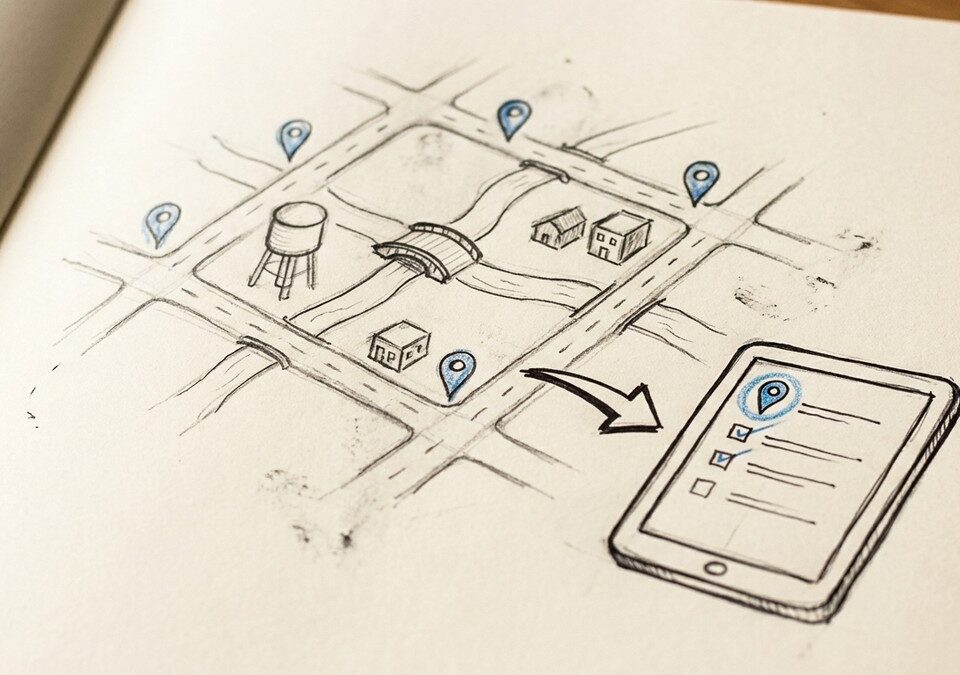
6. Enable Field-to-Office Data Flow
The people who know your wells best are the ones who visit them regularly. Field technicians observe conditions, perform maintenance, and collect data that’s critical for good decision-making.
But too often, field data never makes it to the office or arrives weeks later, scrawled on paper forms that someone has to manually transcribe.
Modern well management requires mobile capabilities:
- Mobile data collection – Field staff enter data on tablets or phones, right at the wellsite
- Offline functionality – Canadian well sites often lack connectivity; systems must work offline and sync when connected
- Photo and document capture – Visual records of equipment condition, completed work, and site status
- GPS integration – Automatic location tagging for field activities
- Real-time visibility – Office staff see field updates as they happen, not days later
Benefits of mobile-enabled workflows:
- Eliminate paper forms and manual data entry
- Reduce errors from transcription
- Speed up response to issues identified in the field
- Create complete, timestamped records of all field activities
- Enable field staff to access well history and documentation on-site
7. Protect Institutional Knowledge
Oil and gas is facing a demographic challenge. Experienced workers are retiring, and their knowledge often leaves with them. The engineer who remembered why that well was drilled the way it was, the foreman who knew every quirk of the production facility when they’re gone, that knowledge is lost.
Capture knowledge systematically:
- Document decisions – When significant decisions are made about a well, record the reasoning, not just the outcome
- Create well narratives – Beyond raw data, maintain written histories of wells that capture context and lessons learned
- Standardize processes – Documented procedures reduce dependence on individual expertise
- Cross-train staff – Don’t let critical knowledge exist in only one person’s head
- Exit interviews – When experienced staff leave, capture their knowledge before they go
Make knowledge accessible – It’s not enough to capture information; people need to find it. Good search, logical organization, and linking related records together make the difference between a useful knowledge base and a digital filing cabinet.
Common Well Management Mistakes to Avoid
Relying on Spreadsheets for Critical Data
Spreadsheets are flexible and familiar, but they’re not designed for managing complex, interconnected well data. Common problems include:
- Version control issues (which spreadsheet is current?)
- No audit trail (who changed what?)
- Data validation limitations (errors slip through)
- Collaboration difficulties (one user at a time)
- Scaling problems (performance degrades with large datasets)
For anything beyond simple, static data, purpose-built systems outperform spreadsheets.
Treating Compliance as a Separate Activity
When compliance is handled by a separate team using separate systems, it creates extra work and increases error risk. Compliance should be integrated into daily workflows so that doing the work correctly automatically generates compliant records.
Neglecting Inactive Wells
Wells that aren’t producing still require attention. Inactive wells need:
- Periodic inspections
- Integrity monitoring
- Lease and surface agreement management
- ARO updates
- Eventual abandonment planning
Out of sight shouldn’t mean out of mind.
Underinvesting in Data Quality
Bad data leads to bad decisions. Every hour spent cleaning up data problems, reconciling conflicting records, or hunting for missing information is an hour not spent on productive work. Invest in data quality upfront – it pays dividends forever.
Technology's Role in Modern Well Management
Software can’t replace good practices, but it can make good practices easier to follow consistently.
What to look for in well management software:
- Centralized database – Single source of truth for all well information
- Configurable workflows – Adapt to your processes, not the other way around
- Mobile access – Field data collection with offline capabilities
- Compliance features – Built-in support for Canadian regulatory requirements
- Reporting and analytics – Turn data into insights
- Integration capabilities – Connect with other systems (accounting, SCADA, GIS)
- Audit trails – Complete history of all changes
- Canadian support – Vendor understands Canadian regulatory environment
Implementation considerations:
- Start with clear objectives—what problems are you solving?
- Plan for data migration—getting existing data into the new system
- Invest in training—software only works if people use it correctly
- Measure results—track whether you’re achieving expected benefits
Getting Started: A Practical Roadmap
Improving well management doesn’t happen overnight. Here’s a realistic approach:
Phase 1: Assessment (1-2 months)
- Inventory your current data sources and systems
- Identify gaps and pain points
- Document current processes
- Define priorities based on risk and opportunity
Phase 2: Foundation (2-4 months)
- Select and implement core well management system
- Migrate critical data (start with active wells)
- Establish data standards and governance
- Train key users
Phase 3: Expansion (4-8 months)
- Roll out mobile capabilities to field staff
- Integrate compliance workflows
- Migrate historical data
- Extend to additional well categories
Phase 4: Optimization (Ongoing)
- Refine processes based on experience
- Add analytics and reporting capabilities
- Integrate with other business systems
- Continuous improvement based on user feedback
conclusionNext Step
Effective well management is foundational to successful oil and gas operations in Canada. The operators who excel at it – who maintain accurate data, stay ahead of compliance requirements, manage their assets proactively, and preserve institutional knowledge are better positioned to weather industry cycles and capitalize on opportunities.
The practices outlined in this guide aren’t revolutionary. They’re proven approaches that successful operators have used for years. What’s changed is the technology available to implement them efficiently at scale.
Whether you’re managing ten wells or ten thousand, the principles are the same: centralize your data, standardize your processes, stay compliant, plan for the future, and invest in the systems and practices that make it all sustainable.